


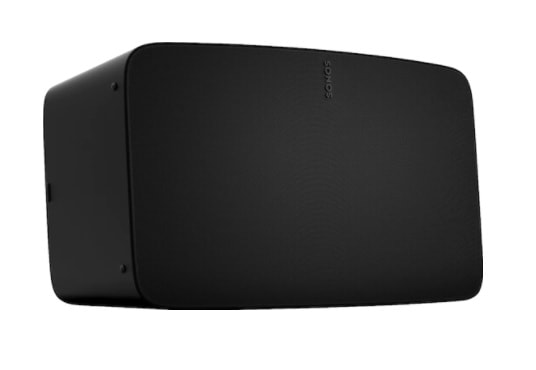
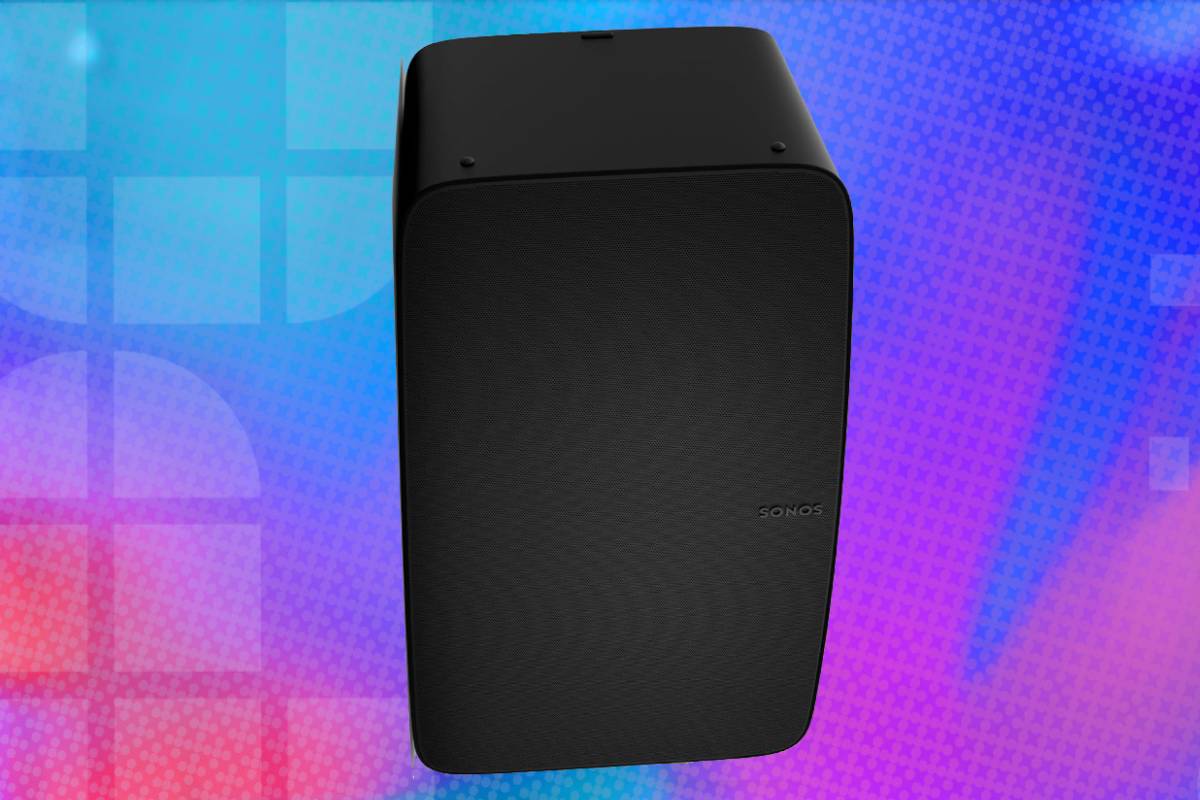
The Sonos Five delivers strong bass, a wide soundstage and seamless multi-room playback, making it particularly appealing to listeners already invested in the Sonos ecosystem. Its 3.5mm line input, Apple AirPlay 2 support and ability to form a dedicated stereo pair give it more flexibility than many app-controlled home speakers. It lacks Bluetooth audio and built-in voice control (for these you’d be better suited with the Sonos Era 300, which is also on offer), but for the sheer quality and volume of sound, this fantastic speaker is hard to beat. Pick it up in this Black Friday deal for 27% off the MSRP while this offer lasts!
🔥 More offers: see our Black Friday deals 2026 guide, updated daily.
Prices and savings can change. Check the retailer for the current price.
When placed horizontally, one Sonos Five processes the incoming signal as stereo and directs left, centre and right information across its driver array. This produces a broader presentation than a conventional mono smart speaker, although the limited physical distance between its left and right drivers cannot match two separated speakers. Pairing two Fives creates distinct left and right channels. Sonos recommends vertical positioning for a more focused conventional stereo image, while horizontal positioning can create a more expansive presentation.
Black Friday is finally here. Below, you'll find some of the biggest and best deals from this year's most exciting sales event!
- Samsung 49" Odyssey - was $1,279 now $854
- HP HyperX OMEN 16 OLED - was $3,199 now $2,399
- Alienware 32 4K OLED Gaming Monitor - was $699 now $599
- Samsung 75-Inch Class Neo - was $1,197 now $997
- CyberPowerPC RTX 5060 Ti gaming PC - was $1,629 now $1,299
- LG 77-inch OLED C6 - was $2,499 now $1,999
- MSI Prestige 16 Flip - was $2,149 now $1,799
- Hisense 85-inch U6 Pro Series - was $1,999 now $947
Prices correct as of November 25th, 2026.
The speaker is capable of filling a medium or relatively large room without an additional subwoofer. Its sound is generally full and energetic, although some listeners may find the factory balance bass-heavy until Trueplay or manual equalisation is applied. Read on for more detail on the specifications, or see the foot of this page for alternative Black Friday speaker deals.
What we like about the Sonos Five
Six-driver acoustic design
Six Class-D digital amplifiers independently power the Five’s three tweeters and three midwoofers. Sonos tunes the amplification and signal processing specifically for the cabinet rather than publishing a generic amplifier-power figure. This integrated approach allows the speaker to manage crossover behaviour, driver protection and tonal balance internally. It also means the Five should be evaluated as a complete active system rather than compared with passive speakers solely through wattage.
The angled tweeters help create a soundstage wider than the enclosure. Vocals remain centrally anchored, while instruments and spatial effects can extend towards the sides.
Deep bass without a separate subwoofer
The three midwoofers produce substantially more low-frequency energy than smaller Sonos speakers. Bass drums, electronic music and cinematic sound effects have useful weight even without a Sonos Sub. The sealed cabinet helps keep bass relatively controlled at ordinary listening levels. It also avoids the obvious port noise that can occur in some compact reflex-loaded speakers.
Room placement has a significant effect on low frequencies. Positioning the Five close to a wall or corner can increase bass output, but may also make the sound boomy. Trueplay and the app’s bass control can help compensate.
Wide presentation from one speaker
A single Five automatically adjusts its processing according to its orientation. Horizontal placement activates a stereo presentation, while vertical placement changes the speaker to mono. This makes horizontal positioning the more sensible choice when using one speaker for music. It provides some separation between the left and right portions of a recording without requiring a second unit.
The stereo effect still comes from one physical location. Listeners seeking precise imaging and a clearly defined soundstage should use two Fives placed several feet apart.
Excellent stereo-pair potential
Two Sonos Five speakers can be assigned as a stereo pair, with one handling the left channel and the other the right. This creates a much wider and more convincing image than the virtual stereo presentation from one cabinet. Vertical positioning gives each speaker a focused mono output and is generally the most conventional arrangement. Horizontal placement can provide a broader, more diffuse sound, depending on the room and listening distance.
A stereo pair is expensive, but it offers enough output and bass extension to serve as a complete wireless music system in many rooms. A Sonos Sub can still be added for listeners who want greater low-frequency extension or higher output.
Trueplay room correction
Trueplay measures how sound reflects around the room and adjusts the speaker’s equalisation accordingly. It can reduce excessive bass, improve tonal balance and compensate for less-than-ideal placement. On the Sonos Five, traditional Trueplay tuning requires the microphones in a compatible iPhone or iPad. The speaker does not contain its own microphone array for automatic tuning. This distinction matters for Android users. They can control the speaker and manually adjust its equaliser, but may need access to a supported iOS device to perform full Trueplay calibration.
Independent reviews have found the Five noticeably better balanced after Trueplay. The improvement can be especially useful when the speaker must sit near a rear wall or in an acoustically difficult room.
Useful 3.5mm line input
The analogue input allows a turntable, CD player, computer or other audio source to feed into the Sonos system. Once connected, that source can be played on the Five or distributed to other Sonos rooms. Many turntables output a very low phono-level signal and therefore require a built-in or external phono preamplifier. The Five accepts a conventional line-level signal, not a raw phono cartridge connection.
The required 3.5mm cable is not listed among the standard box contents. Depending on the source device, buyers may need a 3.5mm-to-3.5mm cable or an RCA-to-3.5mm cable.
Line-in audio can be shared throughout the home
A device connected to the Five’s analogue input becomes available within the Sonos system. This allows a turntable in one room to play through grouped speakers elsewhere in the home. The speaker converts the analogue signal into digital audio before processing and distribution. This enables multi-room playback, equalisation and volume control but introduces a delay. That delay is generally unimportant for records, CDs and audio-only sources. It can be distracting when watching television, playing an instrument or gaming because the sound may no longer align with the picture or physical action.
Strong Wi-Fi streaming
The Five streams over a home Wi-Fi network rather than relying on ordinary Bluetooth audio. Wi-Fi provides greater range, supports higher-quality streams and allows playback to continue without being interrupted by phone calls or a device moving out of short-range Bluetooth coverage. Sonos supports a broad selection of music services through its app. Compatible services such as Spotify and TIDAL can also control the speaker directly from their own applications. Network dependence means the Five is less convenient for visitors who expect immediate Bluetooth pairing. Initial setup also requires the Sonos app and a suitable home network.
Apple AirPlay 2
AirPlay 2 allows audio to be sent from an iPhone, iPad or Mac without navigating through the Sonos app. It works with music, podcasts and system audio from supported Apple devices.
AirPlay-compatible Sonos speakers can also be grouped with other Sonos products for multi-room playback. This provides an easy route into the Sonos ecosystem for Apple users. AirPlay is unavailable when a Sonos speaker is configured as a home-theatre surround. That limitation should be considered before dedicating a pair of Fives to rear-channel duties.
Ethernet connection
A 10/100 Ethernet port provides a wired alternative when Wi-Fi is unreliable. This can improve connection stability in busy wireless environments or rooms with weak coverage. The port’s 100Mbps limit is more than sufficient for audio streaming, even though it is much slower than current Gigabit networking. Higher network speed would not materially improve normal music playback.
A wired connection also reduces dependence on the speaker’s older wireless hardware. The current Five supports 2.4GHz and 5GHz Wi-Fi, but it does not offer Wi-Fi 6 or Wi-Fi 7.
Multi-room integration
The Five can play independently, form a stereo pair or join other Sonos rooms. Group volume and playback can be controlled centrally through the app. Different rooms can play the same programme in synchronisation or operate separately. This is one of the Five’s main advantages over an isolated Bluetooth speaker.
The value of this integration increases when a household already owns Sonos products. Someone buying a single speaker with no interest in multi-room audio has more reason to compare conventional active speakers from other manufacturers.
Can be used as home-theatre surrounds
Two Sonos Five speakers can serve as rear surrounds with a compatible Sonos soundbar. Their output and bass capacity make them powerful surround speakers, although they may be more capability than many rooms require for rear-channel effects. When configured as surrounds, some standalone features are restricted. AirPlay and line-in playback are not available in the same way, because the speakers become part of the soundbar-controlled home-theatre room.
The Five does not contain upward-firing drivers. A pair can provide strong conventional rear-channel sound but does not reproduce the dedicated height effects offered by Era 300 surrounds.
Orientation sensing
The speaker detects whether it is standing vertically or lying horizontally and adjusts its touch controls and audio processing. This prevents the control gestures from becoming confusing after the cabinet is rotated. Horizontal orientation is intended for full stereo playback from one speaker. Vertical orientation is intended for mono operation, particularly when using two units as a stereo pair.
The speaker should be given a small amount of clearance around its sides and rear. Crowding it tightly into furniture can affect both the soundstage and bass response.
Capacitive touch controls
The top panel provides controls for playback, volume and track navigation. Users can play or pause music, adjust volume and move between tracks without opening the app. Touch controls can be disabled if the speaker is placed somewhere they might be activated accidentally. The front status light communicates connection and error information. There are no traditional physical buttons for everyday playback. Users who prefer tactile switches may find the app and capacitive controls less direct.
Adjustable equalisation
The Sonos app provides controls for bass, treble and loudness. These adjustments are useful when the speaker’s default low-frequency balance is too strong for the room or listening preference. The loudness option maintains a fuller tonal balance at lower volumes. Disabling it can produce a more neutral presentation in some rooms. The app also manages stereo balance when two speakers are paired. Trueplay provides a broader room correction process, while manual controls allow further adjustment afterwards.
Substantial output for larger rooms
The Five can play loudly and maintain a full tonal balance through much of its volume range. It is suitable for larger living spaces, kitchens and indoor gatherings where a smaller smart speaker may sound strained. Some independent measurements indicate increased compression at maximum volume. This is common in active speakers that use digital limiting to protect their drivers. For the cleanest result, the Five is best used below its absolute maximum. Two speakers can provide wider coverage and greater headroom without requiring either unit to work as hard.
Who should consider this Sonos Five deal?
The Sonos Five is best suited to listeners who want a powerful fixed wireless speaker for music and already use, or plan to build, a Sonos multi-room system. It works particularly well in living rooms, kitchens and larger spaces where smaller speakers may lack bass or volume. It is also a good choice for someone who wants to distribute a turntable, CD player or other analogue source throughout a Sonos system. A phono preamp may be required, and the digital processing delay means the line input is intended for audio listening rather than television or live monitoring.
One Five is appropriate when simplicity and room-filling sound matter more than precise stereo imaging. Two vertically positioned Fives are the better option for listeners who want a defined left-right soundstage. A pair can also work as powerful rear surrounds, but buyers focused on Dolby Atmos height effects should compare the Era 300. The Five prioritises traditional music reproduction and bass output over spatial-audio features.
It is not the right speaker for portable use, Bluetooth-first households or users who want integrated Alexa or Sonos Voice Control. Those buyers should consider a battery-powered Sonos model or one of the newer Era speakers.
Some more Black Friday speaker deals


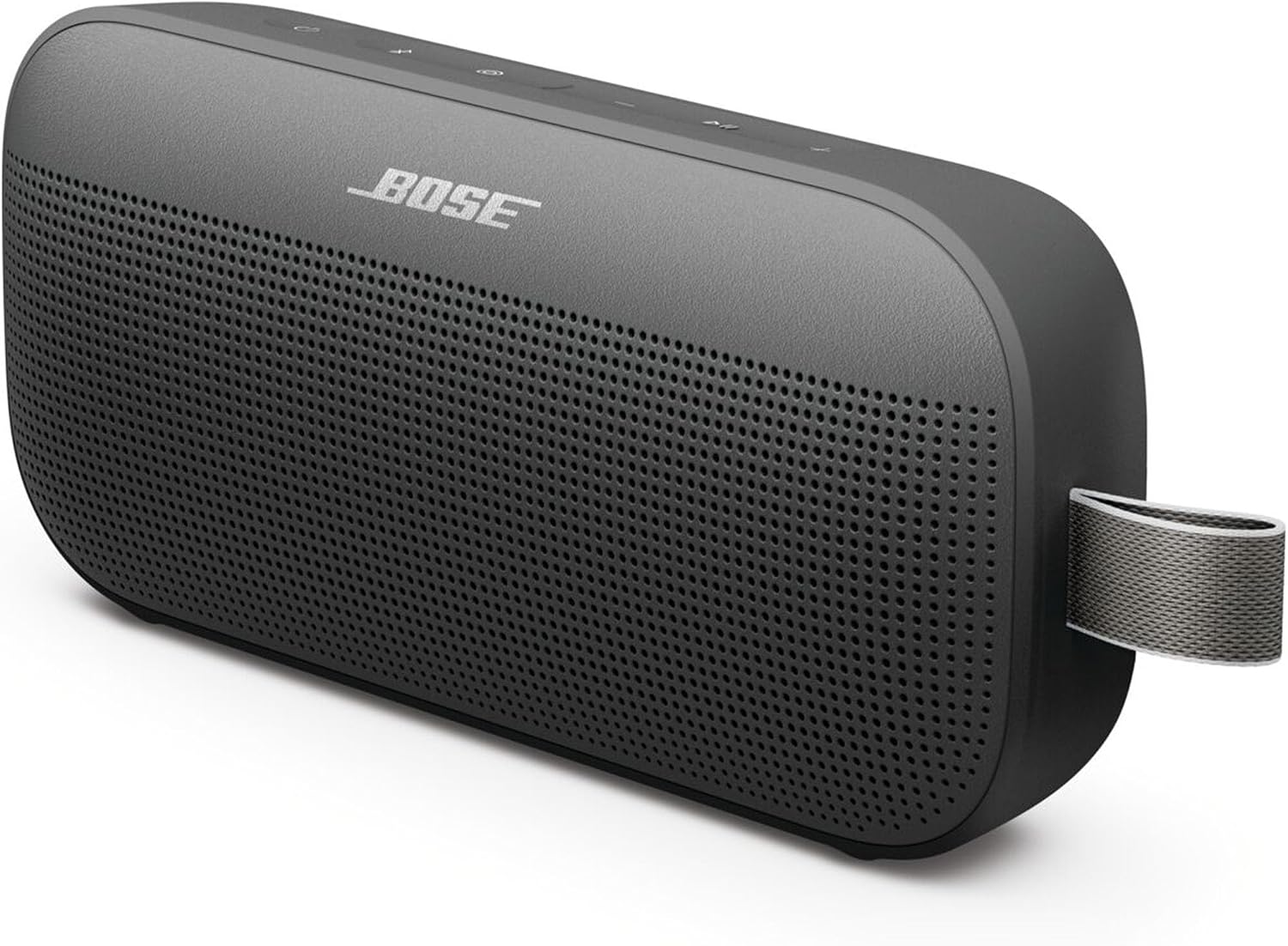
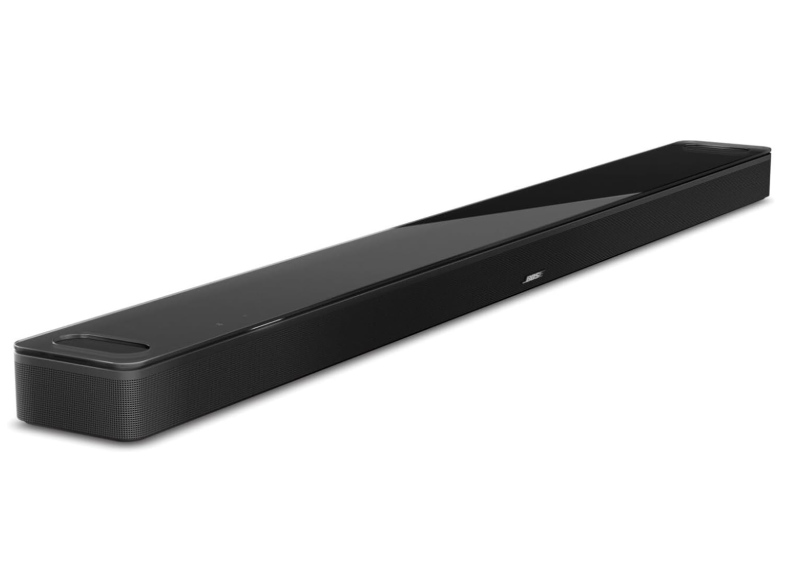




Prices and savings can change. Check the retailer for the current price.
Written by
