

The best OLED TV for the money on the market drops to lowest ever price in Amazon deal


Table of Contents
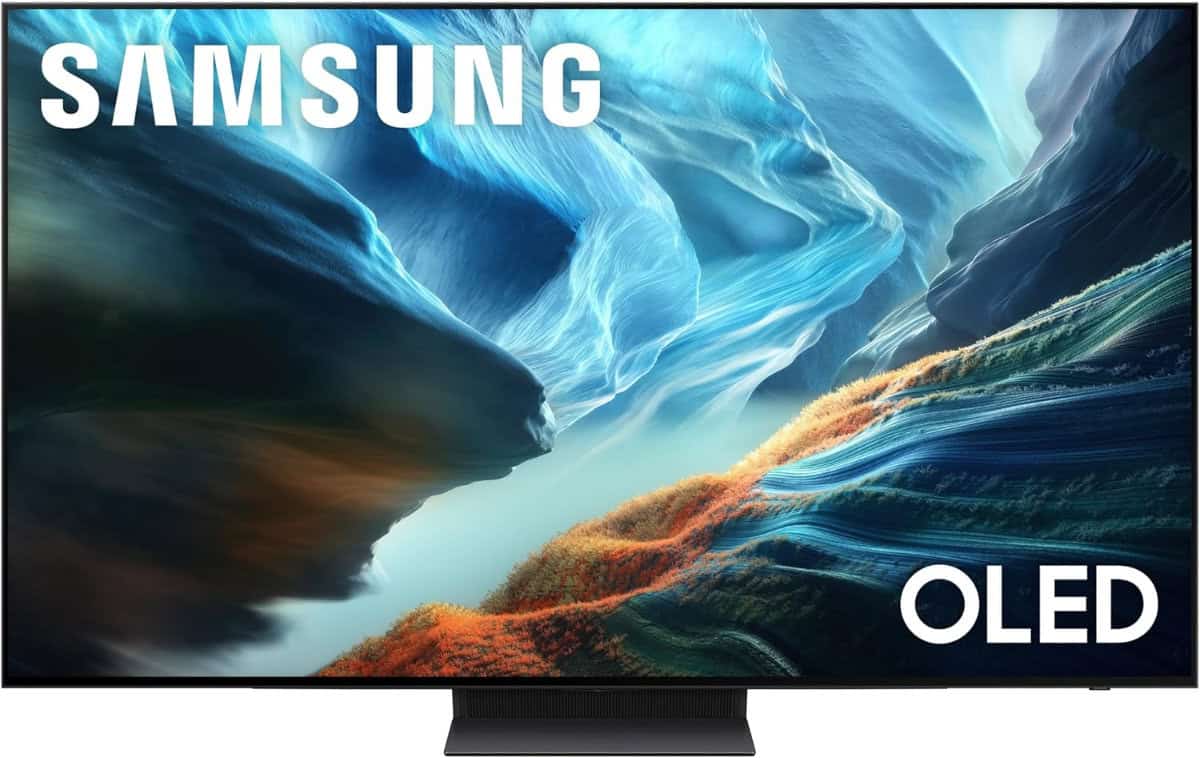
The Samsung S90H is a versatile 65-inch OLED TV that combines deep black levels and rapid pixel response with an unusually effective glare-reducing screen. Its four HDMI 2.1 connections, 4K/165Hz PC support and compatibility with both G-Sync and FreeSync Premium Pro make it especially attractive for gaming. For an OLED TV, it also comes with good peak brightness as well. Although newer models have been released, everything considered, this is still the best OLED TV for the price currently on the market in our view, and for $400 off the MSRP (its lowest ever on Amazon) this is an absolute no-brainer of a purchase.

The 65-inch S90H measures approximately 56.9 inches wide and weighs around 42.1 pounds without its stand. The supplied stand increases the overall depth to approximately 10.4 inches. Buyers should confirm that their furniture accommodates both the television and any soundbar without obstructing the lower portion of the screen. A 300 x 200mm VESA pattern supports compatible wall mounts. OLED panels are thin but delicate, so two people should handle the television during installation. Pressure should be applied only at the supported chassis areas rather than directly to the screen. Read below for additional information on the specifications, or read on for more info.
What we like about the Samsung 65-inch S90H OLED TV
Excellent OLED contrast and pixel-level control
The S90H can illuminate small highlights while keeping adjacent pixels black, giving films and games convincing depth. Dark scenes avoid the grey backlight haze found on many LCD televisions, while bright objects remain precisely defined. OLED’s wide viewing angles also make the 65-inch model suitable for larger seating arrangements. Colour and contrast should remain relatively consistent when the television is viewed away from the centre, which is helpful in open-plan rooms or when several people are watching together.
Latest tech deals.
- AMD Ryzen™ 9 9900X 12-Core - was $499 now $328
- CORSAIR 4000D PC Case - was $124.99 now $75.99
- Hisense 65" Class E6SR - was $549 now $377.99
- Apple 2026 MacBook Air - was $1,999 now $1,799
- Skytech Gaming PC Desktop (9850X3d) - was $4,299 now $3,799
- Apple Magic Mouse - was $79 now $59
- MSI Prestige 16 Flip - was $2,149 now $1,899
- Kotin 9700X Gaming PC - was $2,399 now $2,199
Prices correct as of October 9th, 2026.
The retailer lists a maximum brightness of 2,000 nits, but this should not be treated as a guaranteed full-screen or independently verified figure. OLED brightness changes according to the picture mode, window size, content and panel temperature. The S90H can produce impactful HDR highlights, but Samsung’s flagship S95H remains the higher-performance model.
Glare Free coating improves bright-room usability
Samsung’s Glare Free treatment is one of the clearest differences between the S90H and many competing midrange OLED televisions. It disperses light across the screen surface, reducing the distracting visibility of windows, lamps and other bright objects. The coating does not make the television immune to ambient light. Strong illumination can still reduce perceived contrast, and diffused reflections may spread across a larger area than they would on a glossy panel. Nevertheless, it is a meaningful advantage for rooms where curtains cannot always be closed. This characteristic makes the S90H unusually flexible. It can deliver OLED-level black control for evening films while remaining practical for sports, news and general viewing during the day.
Up to 165Hz gaming through all four HDMI inputs
Amazon’s structured table lists a 120Hz refresh rate, but that represents the television’s native baseline rather than its full gaming capability. Samsung officially supports inputs up to 4K at 165Hz through all four HDMI ports when connected to a compatible gaming PC. Current consoles such as PlayStation 5 and Xbox Series X generally operate at up to 4K/120Hz, which the S90H can also accommodate. The higher 165Hz mode is primarily intended for PCs equipped with a graphics card capable of delivering the required output.
All four ports support high-bandwidth HDMI gaming features, avoiding the two-port limitation found on some competing televisions. One HDMI connection also provides eARC for sending high-quality audio to a compatible soundbar or AV receiver.
G-Sync and FreeSync Premium Pro support
The S90H supports variable refresh rate technology, including Nvidia G-Sync compatibility and AMD FreeSync Premium Pro. VRR synchronises the screen’s refresh behaviour with the graphics system, reducing tearing and uneven frame delivery when the frame rate fluctuates. Auto Low Latency Mode can automatically engage an appropriate gaming preset when a supported console is detected. Samsung’s Game Bar provides direct access to settings such as aspect ratio, frame-rate information and gaming picture controls without requiring users to navigate the full settings menu.
OLED’s very fast pixel response contributes to clear motion and a responsive gaming experience. Competitive players will still need to select Game Mode, as cinematic processing modes generally add latency.
Strong HDR10+ gaming and video support
Samsung supports HDR10, HLG and several versions of HDR10+, including dynamic HDR formats intended for compatible films, streaming services and games. HDR10+ uses scene-by-scene or frame-by-frame metadata to help the television adjust its tone mapping.
The S90H does not support Dolby Vision. Dolby Vision content can still play through a compatible source, but it will fall back to another supported HDR format or standard HDR10 rather than using Dolby Vision’s dynamic metadata. This omission matters most to viewers with a substantial Dolby Vision library or users choosing between the S90H and an LG or Sony OLED. It is less significant for HDR10+ content, Samsung-compatible gaming or services that provide multiple HDR formats.
NQ4 AI Gen3 picture processing
Samsung’s NQ4 AI Gen3 processor uses 128 neural networks for upscaling and image analysis. Its 4K AI Upscaling Pro system attempts to improve texture, edge definition and clarity when the source is below native 4K resolution. The processor is particularly useful with compressed streaming video, conventional television channels and older HD material. Results will vary with the source, and heavily compressed or low-resolution footage cannot become equivalent to genuine 4K content.
AI Motion Enhancer Pro is intended to improve the legibility of fast-moving objects and scrolling text. This may help during sports coverage, although strong motion interpolation can introduce an artificial “soap opera” appearance in films. Viewers who prefer cinematic motion can reduce or disable the processing.
Auto HDR Remastering adds impact to SDR material
Auto HDR Remastering analyses standard dynamic-range content and expands its apparent contrast and brightness. Older programmes and films can consequently appear more vivid on the OLED panel.
This is an interpretive enhancement rather than genuine HDR restoration. It changes the presentation beyond the original mastering and may not suit purists. Samsung provides alternative picture modes, allowing viewers to choose a more restrained image when accuracy is the priority.
Useful picture modes for different environments
The S90H offers brighter processing-driven modes for daytime television as well as more accurate settings for films. Filmmaker Mode reduces many artificial enhancements and attempts to preserve the content’s intended frame rate, colour and motion characteristics. Some viewers may find Filmmaker Mode comparatively dim in a brightly lit room. Movie Mode or a carefully adjusted custom preset can provide a better compromise without engaging every AI enhancement at maximum strength.
Professional calibration is not essential for ordinary viewing, but enthusiasts can use advanced controls to refine white balance, colour and tone mapping.
Samsung Vision AI features
Samsung Vision AI integrates content discovery, picture adjustment and smart functions throughout the television. AI-assisted search can help users identify programmes or obtain contextual information, while other functions can tailor picture and sound behaviour to the content and room. These features require network access, and some may depend on a Samsung account, supported language, region or future software updates. Buyers should regard them as complementary conveniences rather than the primary reason to choose the television.
Capable 40W audio system
The S90H uses a 40W multichannel speaker arrangement with Dolby Atmos and Object Tracking Sound. It should provide clearer positioning and greater impact than the basic 20W systems installed in many thin televisions. Q-Symphony allows compatible Samsung televisions and soundbars to use their speakers together. This can produce a broader soundstage than disabling the television speakers entirely, although results depend on the selected soundbar.
Comprehensive smart platform
Samsung’s Tizen-based interface supports major streaming applications, Samsung TV Plus and integration with the SmartThings ecosystem. Alexa is built in, while voice and connected-home features can control compatible devices.
The interface can present a substantial amount of recommended and promotional content. Users who prefer a simpler experience may choose an external streaming player, although doing so occupies one of the HDMI connections.
AirPlay and Google Cast support simplify playback from compatible phones, tablets and computers. Network performance depends on the home connection and wireless environment, with Ethernet available when a stable wired link is preferable.
Practical connectivity
The television includes four HDMI ports, USB connections, Ethernet, Wi-Fi, Bluetooth and an optical digital-audio output. This is sufficient for multiple consoles, a gaming PC, a sound system and additional media devices. Bluetooth 5.3 supports compatible headphones and accessories. Wireless audio can introduce latency, so HDMI eARC or optical output remains preferable for a permanent home-theatre installation.
The US model includes an ATSC tuner, but available information indicates ATSC 1.0 rather than ATSC 3.0 NextGen TV. That distinction matters to viewers expecting compatible over-the-air 4K and advanced broadcast features.
Who should consider this Samsung OLED TV deal?
The Samsung S90H is best for viewers who want OLED contrast but cannot completely control room lighting. Its Glare Free coating, strong HDR presentation and wide viewing angles make it suitable for mixed daytime and evening use, while four 4K/165Hz-capable HDMI ports give it exceptional gaming flexibility.
It is less appropriate for buyers who consider Dolby Vision essential or who prefer the dark-room appearance of a glossy OLED panel. Viewers seeking Samsung’s highest brightness may also prefer the S95H. For gaming, streaming and general home cinema in a room where reflections are a genuine concern, the S90H is a particularly well-balanced OLED television.
Alternative OLED TV deals





About the Author