


Table of Contents
When it comes to display technology, OLEDs have been an incredible option for the job. From TVs to monitors, they bring that impressive vibrant color, perfect black levels, and incredible contrast, as we’ve seen in many of our TV or monitor reviews. But that doesn’t come cheap or without any risks for the displays, too.
Known for burn-in, it was a plague for some of the first few generations and has improved much more in the newer options. Yet over the years, if you have a repeating image displayed on it, the pixels can retain that image and keep showing it even when the picture changes. Well, now RTINGS have found some greater problems, for WOLEDS in particular: edge rot.
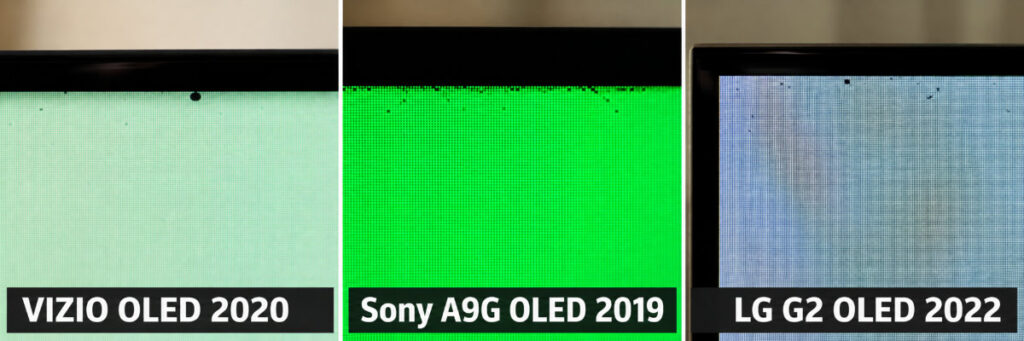
What are edge rot and RTINGS findings?
Edge rot is their term for the range of dead pixels and visible deterioration along the OLED panels. Leaving a range of dead pixels, in singles, clusters, or whatnot, it does resemble something like mold on the wall, hence the name. But unlike burn-in, it just kills the pixels rather than leaving a ghost of an image.
Latest tech deals.
- AMD Ryzen™ 9 9900X 12-Core - was $499 now $331
- Sony INZONE M10S 27” - was $899 now $748
- Thermaltake LCGS View i1470S-170 - was $2,399 now $2,099
- Apple 2026 MacBook Air - was $1,999 now $1,891
- Bose QuietComfort Headphones - was $359 now $169
- LG 77-inch OLED C6 - was $2,499 now $1,999
- MSI Prestige 16 Flip - was $2,149 now $1,870
-
Hisense 85" U6 Pro Series-
Prices correct as of November 5th, 2026.
This seems to paritcualrlryu plaghue WOLEDS performing worse than the QD-OLED counterparts in the accelerated longevity test. Although being a longevity test, the models are many years old, with releases between 2020 and 2022; even the newer ones are still showing the symptoms. Plus, it is a very extreme use case with them being constantly powered, yet it still is a real issue, as RTINGS quotes many Reddit posts that highlight this problem in the real world too.
In its tests, it found that early LG Display-equipped TVs from those years were most susceptible to the problem. At the same time, the QD-OLEDs didn’t have that effect and were an encouraging choice instead. The leading theory of the cause is contamination during manufacturing, with defects in encapsulation or its decay. So another thing to consider before buying a long-term OLED.
| Panel Type | No Edge Rot | Mild Edge Rot | Significant Edge Rot | Severe Edge Rot | Total With Edge Rot |
|---|---|---|---|---|---|
| WBC WOLED (LG Display) | 1 | 1 | 3 | 5 | 9 of 10 |
| WBE WOLED (LG Display) | 1 | 2 | 2 | 1 | 5 of 6 |
| QD-OLED (Samsung Display) | 3 | 0 | 0 | 0 | 0 of 3 |
Written by
