


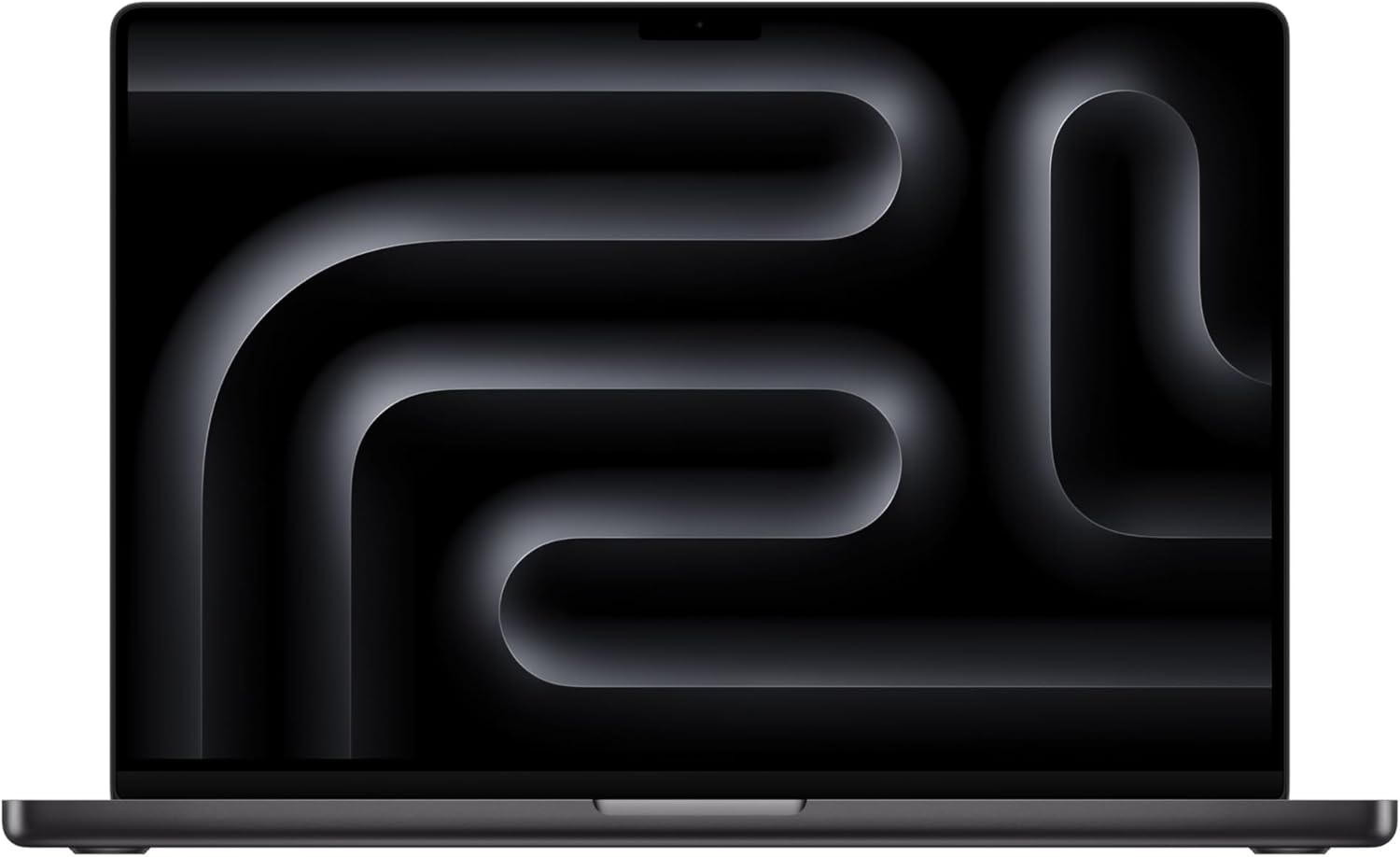
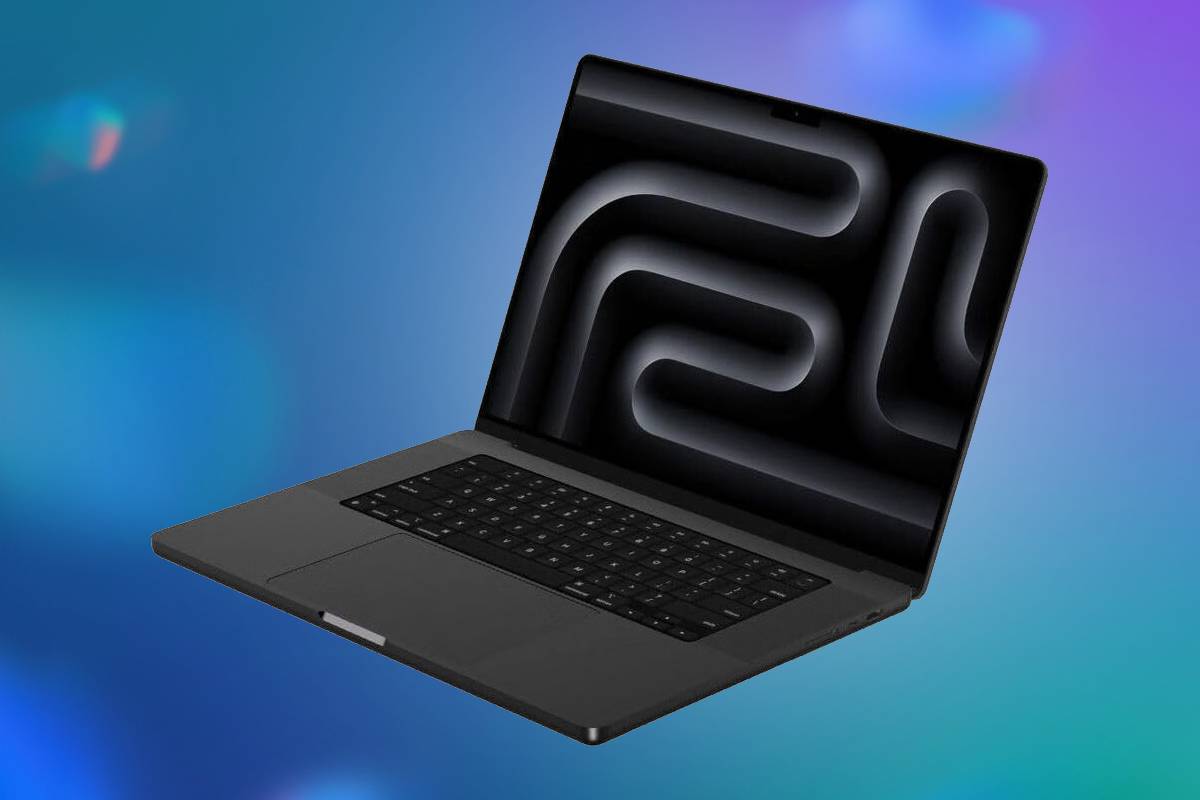
This 16-inch MacBook Pro combines a 18-core M5 Max processor and 32-core GPU with 36GB of unified memory, making it particularly capable for video production, software development, 3D work and appropriately sized on-device AI models. Its excellent Liquid Retina XDR display, long battery life, fast 2TB SSD and extensive external-display support make it a credible portable workstation rather than simply a premium general-purpose laptop. As ever, the MacBook Pro remains the best laptop on the market in terms of build quality, and the speakers are far and above the best out there too. Even with the discount this is not a cheap laptop, and it provides is considerably more power than most buyers need if they’re just after a general productivity machine, but for demanding creative workflows and workstation/AI tasks, it’s a fantastic bit of kit. Buy it now for $500 off the MSRP!
Prices and savings can change. Check the retailer for the current price.
Below we’ve gone into lots more detail about the various specifications of this laptop and what makes it a great choice for demanding productivity tasks. See the bottom of this page for more deals on laptops and also gaming laptops if you’re looking for a dual-use machine for work and play,
What we like about this 2026 Apple MacBook Pro Laptop with Apple M5 Max chip
The M5 Max is designed for sustained professional work
The 16-inch enclosure gives the M5 Max more thermal room than Apple’s smaller professional laptop. Its cooling system can maintain high performance through lengthy exports, code builds and renders instead of delivering only a short burst of speed. The fans can become audible during demanding work, but normal tasks are generally much quieter. High Power mode allows the cooling system to run more aggressively when maximum sustained performance matters. This can improve completion times in some heavily threaded workloads, though it also produces more fan noise and consumes the battery faster. Automatic mode should provide a better balance for ordinary use.
Latest tech deals.
- AMD Ryzen™ 9 9900X 12-Core - was $499 now $331
- Sony INZONE M10S 27-inch - was $899 now $748
- Thermaltake LCGS View i1470S-170 - was $2,399 now $2,099
- Apple 2026 MacBook Air - was $1,999 now $1,891
- Bose QuietComfort Headphones - was $359 now $169
- LG 77-inch OLED C6 - was $2,499 now $1,999
- MSI Prestige 16 Flip - was $2,149 now $1,870
- Hisense 85-inch U6 Pro Series - was $1,999 now $997
Prices correct as of November 5th, 2026.
The laptop maintains much of its processing performance when disconnected from mains power. That is useful for photographers, film crews and developers who need workstation-class responsiveness away from a desk. As with any high-performance laptop, extremely demanding work will still reduce battery life substantially compared with light browsing or video playback.
It is especially capable for video production
The combination of two ProRes engines, two general video encoders and a fast SSD makes the MacBook Pro well suited to Final Cut Pro, DaVinci Resolve and other optimised editing applications. It can handle high-resolution footage, effects and multiple streams more smoothly than specifications based solely on CPU core counts might suggest. The 36GB memory pool can be accessed by both the processor and GPU, which is useful when working with complex timelines or large visual assets. The 2TB SSD also provides useful working space before an external project drive becomes necessary.
Not every codec receives the same degree of hardware assistance. Performance may be less exceptional with uncommon formats, unoptimised plugins or applications originally designed around Windows and CUDA. Buyers whose work relies on one specialised package should verify its macOS compatibility and Apple silicon support before treating benchmark results from other applications as representative.
On-device AI work benefits from shared memory
The M5 Max combines its 16-core Neural Engine with Neural Accelerators in the GPU cores and very high memory bandwidth. Compatible AI applications can use these resources for image generation, transcription, upscaling, coding assistance and local language-model inference. Keeping a model on the computer can reduce reliance on an internet connection and give the user more control over sensitive source material. This may be valuable for developers, researchers and creative professionals working with confidential documents or unreleased media. Whether a particular application processes everything locally depends on that application, rather than the laptop alone.
The shared-memory architecture is useful because the GPU is not confined to a comparatively small dedicated video-memory allocation. Nevertheless, 36GB is the entry memory capacity for this 32-core M5 Max configuration. It is generous for a laptop but not unlimited, and buyers interested in demanding local AI work should calculate their model and context requirements before purchase.
The Liquid Retina XDR display remains excellent
The 16.2-inch display has a 3456 x 2234 native resolution, producing a density of 254 pixels per inch. Text and interface elements look exceptionally sharp, while the large workspace is comfortable for editing timelines, arranging development tools and reviewing high-resolution images. Apple’s mini-LED backlighting enables a claimed 1,000,000:1 contrast ratio, up to 1,000 nits of sustained full-screen XDR brightness and peaks of 1,600 nits in HDR content. Bright highlights can appear alongside deep shadows without the entire image looking washed out. Local-dimming zones cannot control light as precisely as individual OLED pixels, so small bright objects may still create some blooming against black backgrounds.
ProMotion adjusts the refresh rate up to 120Hz. Scrolling, animation and cursor movement consequently look smoother than on a conventional 60Hz laptop, while the system can reduce the refresh rate when appropriate to conserve energy. Fixed rates including 48Hz, 50Hz and 60Hz also accommodate common video-production workflows.
The panel supports the P3 wide-colour gamut, one billion colours, True Tone and several professional reference modes. True Tone changes the screen’s colour temperature according to ambient light and is helpful for casual viewing, but colour-critical work is normally better performed with it disabled and an appropriate reference mode selected.
The Amazon specifications mention nano-texture glass, but MGED4LL/A is generally identified as a standard-display retail configuration. Nano-texture is an optional upgrade intended to reduce reflections in bright working environments, not a feature that should be assumed from the generic technical table. Buyers specifically wanting it should confirm the exact order configuration before purchasing.
Connectivity is unusually complete for a modern MacBook
Three Thunderbolt 5 ports support charging, DisplayPort, USB4 and data transfers of up to 120Gb/s in compatible circumstances. Thunderbolt 5 is useful for fast external storage, high-resolution displays, professional docks and expansion hardware, although accessories must support the relevant standard to approach its maximum speed. The laptop also includes a dedicated HDMI port, SDXC card slot, MagSafe 3 charging connection and 3.5mm headphone jack. Photographers and videographers can transfer files directly from compatible cards, while HDMI avoids requiring an adapter for many monitors, televisions and presentation systems.
The headphone socket includes enhanced support for high-impedance headphones. This will be useful to audio professionals and enthusiasts, although a dedicated external audio interface remains preferable when multiple studio inputs, balanced outputs or specialist monitoring controls are required.
The M5 Max version can drive up to four external displays while continuing to operate its internal screen. Supported arrangements include four displays at up to 6K and 60Hz or two displays at up to 8K and 60Hz, depending on connections and display capabilities. That capacity makes the notebook a practical centrepiece for an elaborate editing or development workstation.
Wi-Fi 7 improves wireless longevity
Apple’s N1 wireless chip introduces Wi-Fi 7, Bluetooth 6 and Thread networking support. Wi-Fi 7 can provide faster transfers, lower latency and more efficient use of available spectrum when connected to compatible network equipment.
The laptop remains backward-compatible with earlier Wi-Fi generations, so a new router is not required. Users will only receive the full benefits of Wi-Fi 7 when the router, local network and surrounding wireless conditions support them. Internet performance will also remain limited by the broadband connection itself.
Battery life is strong for this level of performance
Apple rates the M5 Max version for up to 22 hours of streamed video or 16 hours of wireless web use from its 100Wh battery. Those figures describe controlled light-use scenarios rather than demanding rendering or AI operation, but they demonstrate how efficiently Apple silicon handles everyday work. The included 140W USB-C power adapter supports fast charging through MagSafe 3. MagSafe can detach if the cable is pulled, and it leaves the Thunderbolt ports available for peripherals. Charging through USB-C is also supported when a suitable power source is used.
The camera and speakers are well suited to mobile work
The 12MP Center Stage camera can keep the user framed during calls and supports Desk View for showing the workspace below. Video output is limited to 1080p, but Apple’s image processing generally produces a clearer result than the resolution alone implies. A three-microphone array uses directional beamforming to improve voice capture. Voice Isolation can suppress background sounds during calls, while Wide Spectrum is intended to preserve more of the surrounding audio where appropriate.
The six-speaker system includes force-cancelling woofers and supports Spatial Audio and Dolby Atmos. It provides unusually full sound for a laptop and is adequate for reviewing edits or watching films without external speakers. Professional audio mixing should still be performed through suitable headphones or calibrated monitors.
Apple’s ecosystem can streamline daily tasks
MacBook Pro integrates closely with iPhone and other Apple devices. Users can copy content between devices, answer calls and messages from the Mac, use an iPhone as a high-quality webcam and access supported iPhone applications or controls through Apple’s continuity features. This integration is genuinely convenient for established Apple users but less valuable to someone using an Android phone and Windows-oriented services. It should be regarded as part of the buying decision rather than as a substitute for application compatibility.
Who should consider this MacBook Pro deal?
This configuration is best suited to video editors, software developers, photographers, musicians, designers and technical professionals whose work already benefits from Apple silicon. Its combination of high CPU performance, 32 GPU cores, dedicated media engines and a fast 2TB SSD can shorten demanding production tasks while remaining practical on battery power. It is also a strong option for developers experimenting with private on-device AI. The 36GB unified-memory pool can accommodate many useful local models and AI-assisted creative workflows without the limited graphics memory found in numerous conventional laptops. Serious model training, very large language models or extensive datasets may justify moving directly to a 48GB, 64GB or 128GB configuration.
The MacBook is less compelling for someone whose work is primarily web browsing, office software, streaming and occasional photo editing. An M5 or M5 Pro model can deliver the same operating-system experience, similar single-core responsiveness and the same high-quality construction for considerably less money.
It is not the safest choice for specialist Windows engineering software, CUDA-dependent scientific tools or a large library of PC games. Virtualisation can address some Windows requirements, but it does not recreate native Nvidia CUDA support or guarantee compatibility with hardware-dependent applications. The exact software and peripheral workflow should be checked before purchasing.
Current M4 Max owners are also unlikely to receive a transformative everyday upgrade. Independent testing indicates meaningful GPU and storage improvements, but CPU gains over the previous Max generation are generally more incremental. Owners of M1 Max or M2 Max systems are more likely to notice a substantial improvement across processing, graphics, connectivity and storage.
More laptop deals


Prices and savings can change. Check the retailer for the current price.
Written by
