


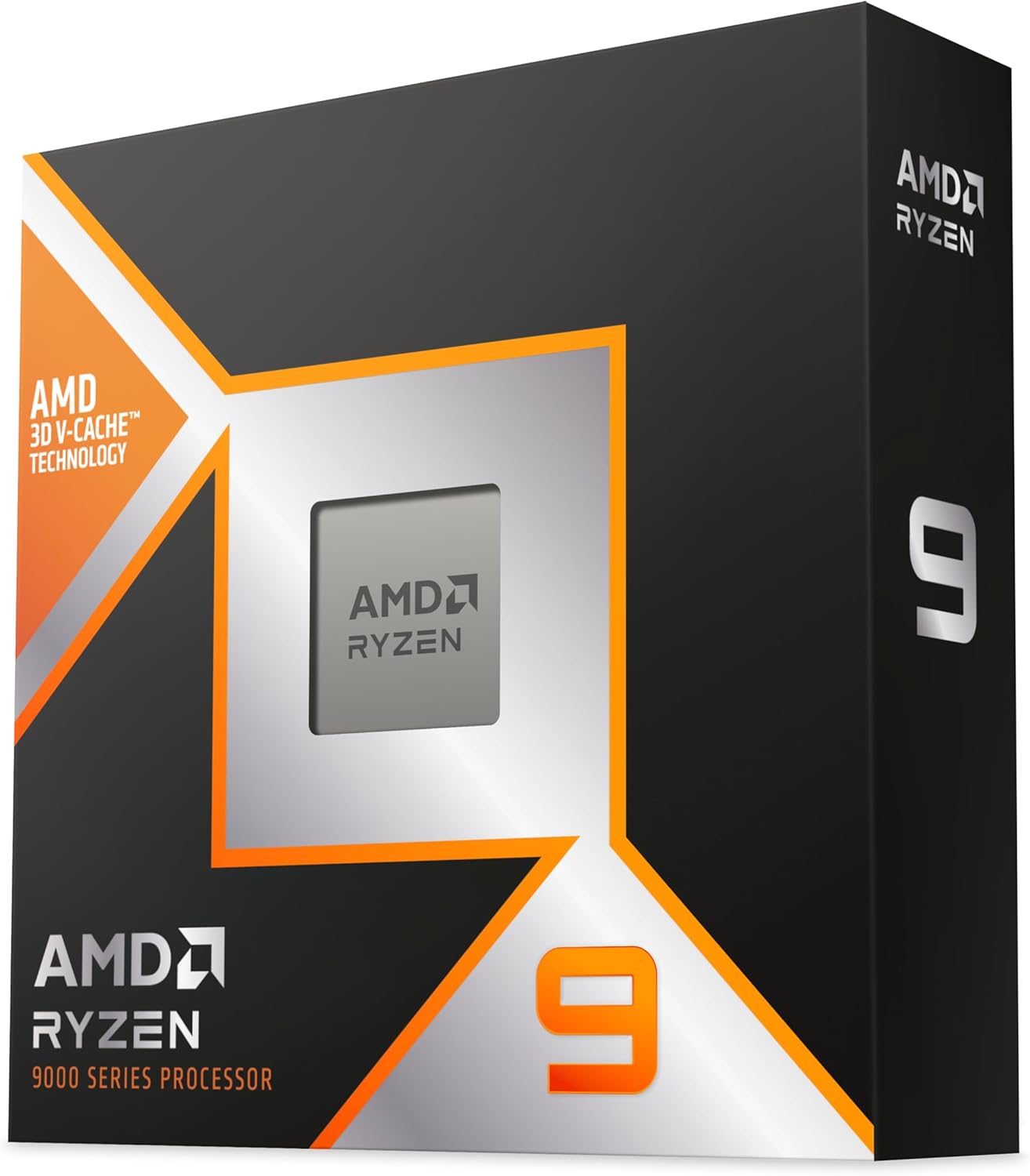
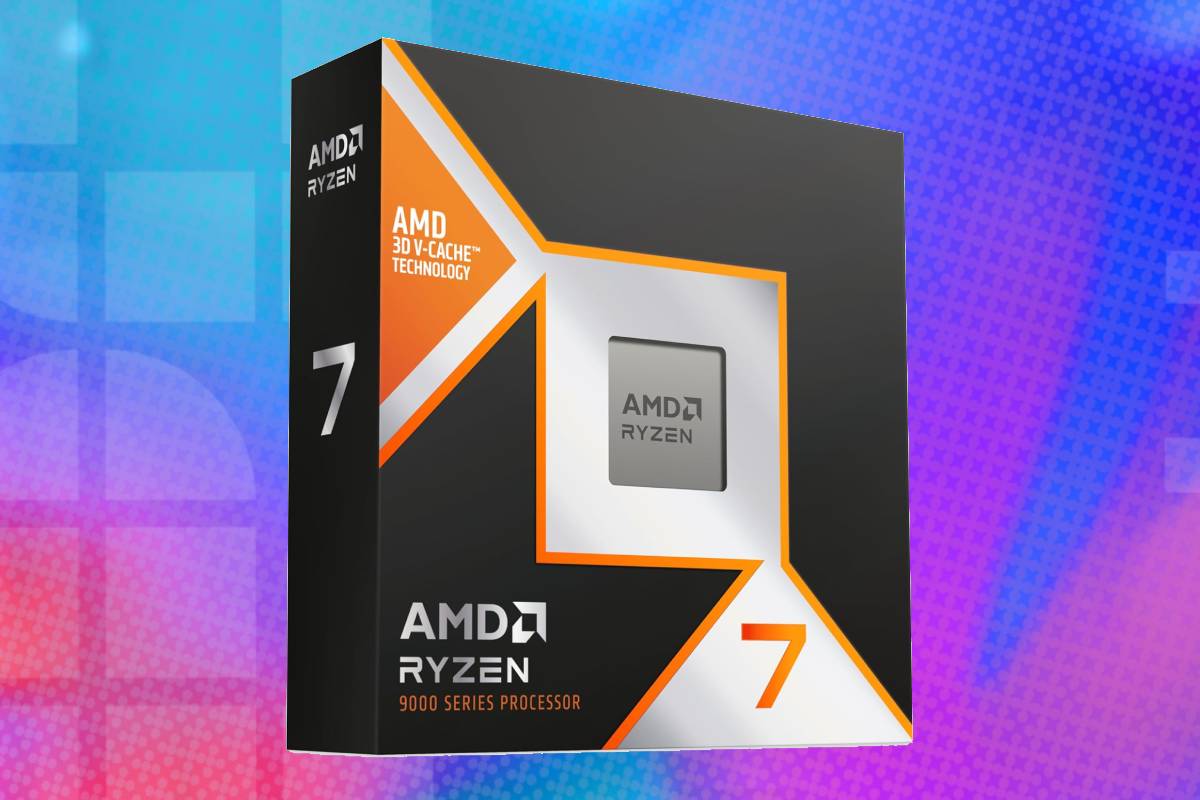
If you’re looking for a CPU that can do it all, this Black Friday Ryzen 9 9950X3D deal is the one for you. The AMD Ryzen 9 9950X3D is one of the strongest all-round desktop processors available, pairing gaming performance close to the Ryzen 7 9800X3D with the multicore capability of a flagship 16-core Ryzen 9. Its second-generation 3D V-Cache, high clock speeds and full overclocking support make it exceptionally versatile, although it requires expensive supporting hardware and a substantial cooling system. It is best suited to users who both game and perform heavily threaded work, while a less costly eight-core X3D processor remains the more sensible choice for a gaming-only PC. Pick it up now for 17% off the MSRP while this Black Friday deal lasts!
🔥 More offers: see our Black Friday CPU deals 2026 guide, updated daily, or browse all Black Friday deals.
Prices and savings can change. Check the retailer for the current price.
The Ryzen 9 9950X3D uses AMD’s Zen 5 architecture and provides 16 cores with simultaneous multithreading for 32 processing threads. Its 4.3GHz base clock can rise to a maximum boost frequency of 5.7GHz under suitable thermal, electrical and workload conditions. Read below for more detailed information on the various specifications, or see the foot of this page for alternative Black Friday CPU deals.
Black Friday is finally here. Below, you'll find some of the biggest and best deals from this year's most exciting sales event!
- Samsung 49" Odyssey - was $1,279 now $854
- HP HyperX OMEN 16 OLED - was $3,199 now $2,399
- Alienware 32 4K OLED Gaming Monitor - was $699 now $599
- Samsung 75-Inch Class Neo - was $1,197 now $997
- CyberPowerPC RTX 5060 Ti gaming PC - was $1,629 now $1,299
- LG 77-inch OLED C6 - was $2,499 now $1,999
- MSI Prestige 16 Flip - was $2,149 now $1,799
- Hisense 85-inch U6 Pro Series - was $1,999 now $947
Prices correct as of November 25th, 2026.
What we like about the AMD Ryzen 9 9950X3D
Sixteen Zen 5 cores provide serious productivity performance
The processor contains two eight-core compute chiplets, giving it 16 full-performance Zen 5 cores rather than dividing work between different performance and efficiency core types. Simultaneous multithreading allows each core to execute two threads, producing the correct total of 32 threads. This makes the chip well suited to Blender rendering, video encoding, code compilation and other tasks that scale effectively across many cores. It also provides enough resources to game while streaming, recording or running demanding applications in the background.
Not every program scales to 32 threads. Lightly threaded applications depend more heavily on boost frequency, memory latency and software optimisation, although the maximum 5.7GHz clock keeps single-threaded performance competitive.
The standard Ryzen 9 9950X can occasionally be faster in specific productivity workloads, particularly when an application gains little from the additional cache. The difference is generally much smaller than the gaming advantage delivered by the X3D model.
Second-generation 3D V-Cache improves gaming performance
AMD places an additional 64MB cache die beneath one of the processor’s core chiplets. Combined with the chip’s conventional cache, this gives it 128MB of L3 and 144MB of total L2-plus-L3 cache. Keeping more frequently requested game data close to the processor reduces trips to comparatively slow system memory. CPU-limited games can therefore achieve higher average frame rates and, in some cases, smoother minimum frame rates.
The second-generation design moves the extra cache below the processor cores rather than stacking it above them. This places the cores closer to the heat spreader and cooling system, giving AMD more thermal headroom for higher frequencies. Only one of the two eight-core chiplets carries the extra cache. The other can run at higher frequencies for tasks that benefit more from clock speed than cache capacity.
Windows, AMD’s chipset driver and game-detection mechanisms work together to direct gaming threads towards the cache-equipped chiplet. The process is substantially improved compared with the first-generation Ryzen 9 X3D implementation, although correct driver and system configuration remain important.
Gaming speed is close to the Ryzen 7 9800X3D
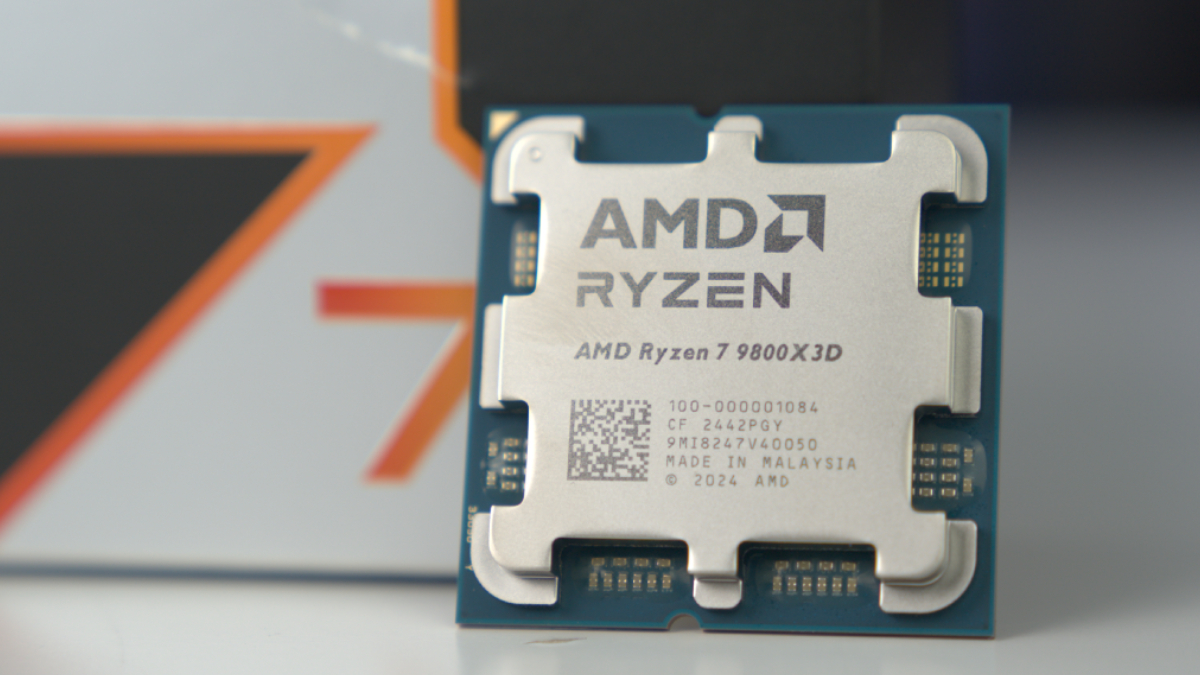
Reviews have found the 9950X3D broadly level with the eight-core Ryzen 7 9800X3D across large gaming test suites. Individual titles can favour either processor because of differences in scheduling, core utilisation and sensitivity to clock speed or cache. That is an impressive result for a dual-chiplet CPU with twice as many cores. Earlier Ryzen 9 X3D models could be less predictable because game threads were not always assigned to the optimal chiplet.
The Ryzen 9 earns its premium through productivity and mixed use. Someone who renders, compiles, edits or runs virtual machines in addition to gaming can use the extra eight cores, whereas a gaming-only owner may see little practical return.
It maintains high boost clocks
The processor has the same advertised 4.3GHz base and 5.7GHz maximum boost clocks as the standard Ryzen 9 9950X. The redesigned cache arrangement enables AMD to avoid the substantial frequency compromises associated with earlier X3D parts. Maximum boost is opportunistic rather than an all-core operating speed. It depends on temperature, motherboard firmware, power delivery, workload type and the quality of the individual processor. During sustained all-core work, frequency will settle below the advertised maximum. This is normal behaviour and not evidence that the processor is defective.
Full overclocking support adds flexibility
The Ryzen 9 9950X3D is unlocked and supports Precision Boost Overdrive, Curve Optimizer and AMD Ryzen Master. Enthusiasts can tune power limits, voltage behaviour and boost characteristics to balance speed, heat and noise. Curve Optimizer can sometimes reduce voltage requirements while preserving or improving boost behaviour. Results vary by individual chip, and unstable settings may only fail under particular workloads.
Overclocking can increase heat, power use and the possibility of instability. Users should understand AMD’s warranty terms and conduct extended stability testing before relying on a tuned system for professional work. For many owners, default settings or a carefully tested Curve Optimizer configuration will provide a better balance than aggressive manual overclocking. The processor is already designed to use available thermal and electrical headroom automatically.
The AM5 platform offers modern connectivity
The chip uses AMD’s AM5 socket and supports DDR5 memory. It also provides PCI Express 5.0 connectivity for compatible graphics and storage devices, subject to the capabilities and lane allocation of the selected motherboard. Officially supported chipsets include X870E, X870, B850, B840, X670E, X670, B650E, B650 and A620. An existing AM5 motherboard may require a BIOS update before it can recognise the 9950X3D.
Higher-end X870E and X670E boards generally provide stronger expansion and connectivity, but they are not essential for obtaining the processor’s core performance. A good B650E or B850 board with appropriate power delivery can be a more economical choice. Motherboard model matters more than the chipset name alone. Buyers should confirm CPU support, BIOS version, memory compatibility, available M.2 lanes and power-delivery quality before ordering.
DDR5-6000 remains a sensible memory target
AMD officially supports DDR5 memory, with the exact guaranteed speed depending on module count and configuration. In enthusiast systems, DDR5-6000 with appropriate EXPO settings is commonly used as a practical balance of bandwidth, latency and stability.
The large 3D V-Cache reduces memory sensitivity in many games because more data remains on the processor. Memory selection can still affect application performance and minimum frame rates.
Enabling EXPO is technically memory overclocking, even when the profile is supplied by the module manufacturer. Stability depends on the processor’s memory controller, motherboard firmware and installed DIMMs.
AVX-512 can accelerate supported professional work
Zen 5 supports AVX-512 instructions, which can improve performance in compatible scientific, AI, encoding and computational applications. The benefit depends entirely on whether the software has been written or compiled to use those instructions. This does not turn the processor into a replacement for a high-end GPU in every AI workload. Modern graphics accelerators remain considerably faster for many highly parallel training and inference tasks.
The processor is nevertheless useful for CPU-based inference, data preparation and applications that cannot use a discrete GPU. Its 16 cores and large cache also help in workloads that combine vector processing with substantial memory access.
The integrated graphics provide useful fallback capability
The 9950X3D includes basic AMD Radeon graphics. They are sufficient for desktop output, troubleshooting and lightweight multimedia use without a discrete graphics card. This integrated GPU is not intended for demanding gaming. Anyone buying a flagship processor of this class will normally pair it with a powerful dedicated graphics card. Its presence is still valuable when diagnosing a GPU problem or building a workstation where display output is required but graphics performance is not. Motherboard video outputs must be present and enabled for it to be useful.
Power consumption is substantial but well controlled
AMD specifies a 170W default thermal design power. Under unrestricted heavy workloads, the package power limit can reach approximately 230W, depending on motherboard settings and workload. Gaming power consumption is usually lower than the worst-case all-core figure, but the 9950X3D is not as efficient in games as the simpler Ryzen 7 9800X3D. Its additional chiplet and cores contribute to greater idle and active power use.
Despite that, independent testing has found the processor efficient relative to the amount of multicore performance delivered. It can outperform competing flagship CPUs while drawing less power in a number of workloads. Electricity use, cooling requirements and room heat should still be considered when building a quiet workstation. The processor’s premium extends beyond its purchase price to the cooling and power hardware around it.
Who should consider this Black Friday Ryzen 9 9950X3D deal?
The Ryzen 9 9950X3D is designed for enthusiasts who want one desktop to deliver both elite gaming and high-end productivity performance. It is particularly appropriate for game developers, video editors, 3D artists, streamers, programmers and other users whose work can exploit 16 cores. It is also attractive to buyers who alternate between competitive high-refresh gaming and heavily threaded professional applications. Few processors combine those two performance profiles as effectively.
A gaming-only buyer should compare it carefully with the Ryzen 7 9800X3D or its current successor. Similar average gaming performance can often be obtained for less money, with lower power use and simpler cooling. The standard Ryzen 9 9950X may offer better value when productivity is the overwhelming priority and gaming is secondary. The X3D premium is justified primarily when both workloads matter.
Existing AM5 owners may be able to upgrade after a BIOS update, but power delivery, cooling and memory compatibility must be checked. Users building from scratch should include a strong motherboard, suitable DDR5, a high-quality power supply and a capable cooler in the total cost.
For the right mixed-use system, the 9950X3D is an unusually complete processor. Its principal weakness is not performance but value for buyers who will use only one side of its gaming-and-creation capability.
More Black Friday CPU deals

Prices and savings can change. Check the retailer for the current price.
Written by
