



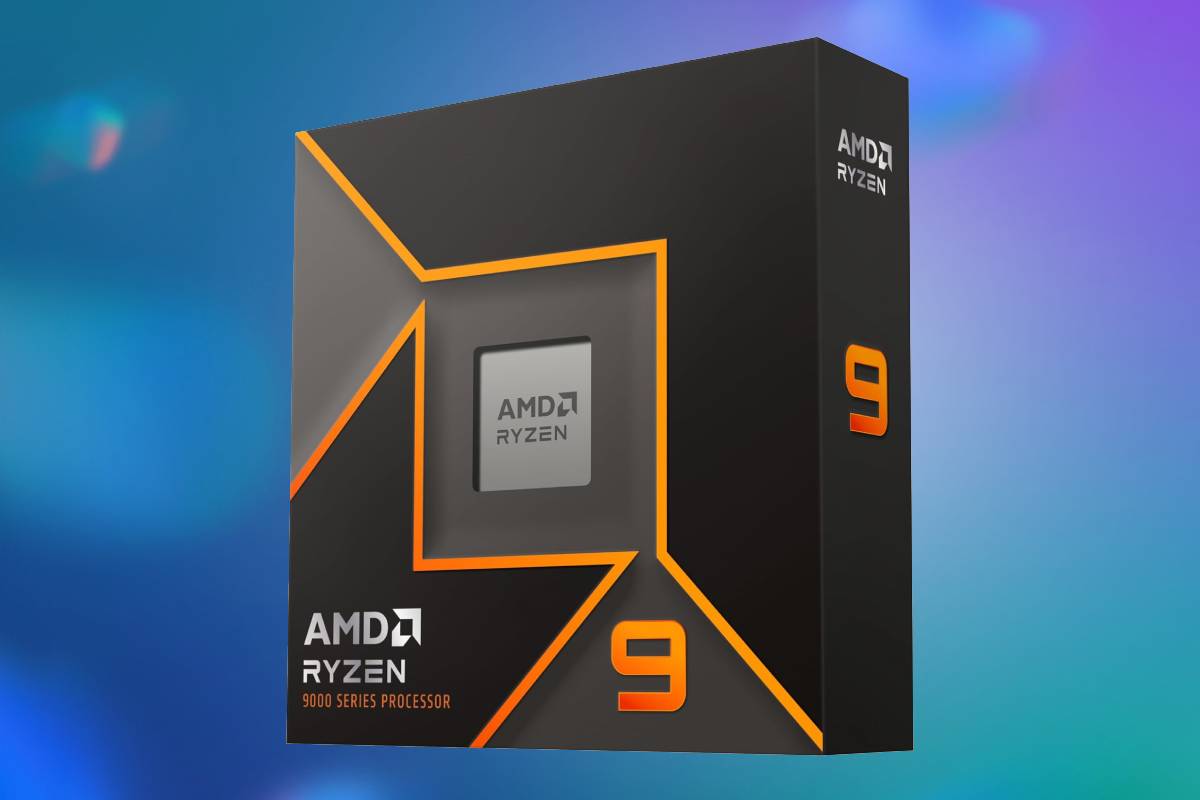
The AMD Ryzen 9 9900X is a high-performance 12-core processor that offers an appealing balance between the eight-core Ryzen 7 models and AMD’s more expensive 16-core flagship chips. Its strong single-threaded performance, 24 processing threads and 120W default TDP make it particularly effective in systems used for both gaming and content creation. Dedicated gaming builds may obtain better frame rates from an X3D processor, but the 9900X remains the more versatile option when productivity performance matters just as much. Pick it up now for $331!
Prices and savings can change. Check the retailer for the current price.
The specifications of this processor make it well suited to heavily threaded applications such as video encoding, CPU rendering, code compilation, software development and running several demanding programs simultaneously. Its high boost frequency also supports responsive everyday performance and strong results in applications that cannot use all 12 cores. Gaming performance is similarly strong when the processor is paired with an appropriate graphics card and fast DDR5 memory. Red below for more detailed information, or see the bottom of this page for alternative CPU deals.
What we like about the AMD Ryzen 9 9900X desktop processor
Twelve Zen 5 processing cores
The 12-core configuration provides considerably more parallel processing capacity than a mainstream six- or eight-core chip. This can shorten demanding renders, exports and compilation tasks while leaving enough resources available for background applications. Zen 5 also brings strong single-core performance, which remains important for general responsiveness, games and lightly threaded professional software. The combination of high per-core speed and substantial core count is what gives the 9900X its broad appeal.
Latest tech deals.
- AMD Ryzen™ 9 9900X 12-Core - was $499 now $328
- CORSAIR 4000D PC Case - was $124.99 now $75.99
- Hisense 65" Class E6SR - was $549 now $377.99
- Apple 2026 MacBook Air - was $1,999 now $1,799
- Skytech Gaming PC Desktop (9850X3d) - was $4,299 now $3,799
- Apple Magic Mouse - was $79 now $59
- MSI Prestige 16 Flip - was $2,149 now $1,899
- Kotin 9700X Gaming PC - was $2,399 now $2,199
Prices correct as of October 9th, 2026.
Its internal design uses two core chiplets alongside a separate input/output die. This chiplet arrangement allows AMD to provide 12 high-performance cores without requiring the larger power envelope of the 16-core Ryzen 9 9950X. There can be workload-specific latency considerations when software moves between chiplets, but modern operating systems and AMD’s platform software are designed to schedule work appropriately.
Strong productivity credentials
The 9900X is particularly attractive for users who earn money from their computer but also want high gaming performance. Video editing suites, 3D rendering packages, software compilers and other heavily threaded tools can make effective use of its 24 threads.
Streaming is another suitable workload. The processor has enough resources to run a game, broadcasting software, browser sources and communication tools concurrently, although modern graphics-card encoders may remain the more efficient choice for video encoding.
Photographers, designers and office users may not use every core continuously, but they can still benefit when exporting large batches, compressing files or processing complex projects. Anyone working exclusively in basic office applications is unlikely to gain enough from the Ryzen 9 designation to justify its additional cost.
Relatively restrained 120W power rating
AMD assigns the Ryzen 9 9900X a 120W default thermal design power. This is lower than the 170W rating of the Ryzen 9 9950X, helping the 12-core chip deliver strong multicore performance without moving into the highest power tier of the desktop range. Actual package power can exceed the nominal TDP while Precision Boost is active, so it should not be assumed that the processor will consume no more than 120W. Motherboard settings, cooling, firmware and workload type all affect its real behaviour.
A capable cooling system is still essential. AMD does not include a stock cooler and recommends liquid cooling for optimal performance. A high-quality dual-tower air cooler may also be suitable in a well-ventilated case, but cooler clearance, motherboard power limits and expected ambient temperature should be considered.
Unlocked tuning support
The processor is multiplier-unlocked and supports Precision Boost Overdrive, Curve Optimizer and AMD Ryzen Master. These features allow experienced users to adjust boost behaviour, power limits and voltage characteristics.
Curve Optimizer can be especially useful because a carefully tested negative offset may reduce voltage and temperature while preserving or improving boost performance. Results vary from one processor sample to another, and overly aggressive settings can cause intermittent instability that is difficult to diagnose.
Traditional manual overclocking is not always the most effective approach on modern Ryzen processors because AMD’s boost algorithm already responds dynamically to temperature, current and workload. Many users will obtain a better balance by enabling memory profiles, optimising cooling and making conservative Precision Boost adjustments.
Modern AM5 platform support
The Ryzen 9 9900X uses AMD’s AM5 socket and supports DDR5 memory. It is compatible with a broad range of AM5 chipsets, including A620, B650, B650E, X670, X670E, B840, B850, X870 and X870E, although an older motherboard may require a BIOS update before recognising a Ryzen 9000 processor. PCI Express 5.0 support provides a modern connection for graphics and storage, with exact availability determined by the motherboard. Premium boards may expose PCIe 5.0 to both the primary graphics slot and one or more M.2 sockets, while less expensive models may use PCIe 4.0 for some connections.
PCIe 5.0 is not required to obtain excellent gaming performance from a current graphics card, and fast PCIe 4.0 SSDs remain more than adequate for most users. The platform support is nevertheless useful for buyers who expect to keep the same motherboard through future upgrades.
The processor officially supports dual-channel DDR5-5600 with a two-module configuration. Faster memory is commonly used through AMD EXPO profiles, with DDR5-6000 frequently chosen for enthusiast AM5 systems, but any speed above the official specification is technically memory overclocking and depends on the processor, motherboard and memory kit.
Large cache allocation
The 9900X contains 12MB of L2 cache and 64MB of L3 cache, for 76MB in total when the two levels are combined. This cache helps keep frequently accessed data close to the processing cores and contributes to performance across games and professional workloads.
It does not incorporate AMD’s 3D V-Cache technology. The Ryzen 9 9900X3D consequently offers much more L3 cache and can perform better in games that respond strongly to additional cache capacity. The regular 9900X can still be preferable when pricing is lower or when its slightly higher maximum boost frequency better suits particular productivity applications.
Basic integrated graphics
A small two-core Radeon graphics processor is built into the 9900X. It is useful for initial system setup, troubleshooting, office applications and driving a display when a dedicated graphics card is unavailable. This integrated GPU should not be confused with the much larger graphics hardware found in AMD’s desktop APUs. It is not intended to power a high-end gaming system and does not remove the need for a discrete graphics card in demanding visual workloads.
Its presence remains valuable in a workstation because it provides a diagnostic fallback if the main graphics card develops a problem. It may also handle basic desktop output in systems where graphical performance is unimportant.
Support for large memory configurations
AMD specifies support for as much as 256GB of DDR5 memory, subject to motherboard firmware, module compatibility and slot configuration. This gives the platform enough capacity for large creative projects, multiple virtual machines and memory-intensive professional tools. Populating all four memory slots can reduce the officially supported memory speed. AMD lists DDR5-5600 for typical two-module arrangements but a lower DDR5-3600 maximum for four-module configurations. In practice, achievable speed varies, so users requiring both very high capacity and high memory frequency should consult the motherboard’s validated memory list.
ECC memory is also supported when the motherboard provides the necessary implementation. This can be useful for workstation-style builds, although consumer-board ECC reporting and validation differ from dedicated server or professional workstation platforms.
Who should consider this Ryzen 9 CPU deal?
The AMD Ryzen 9 9900X is best suited to users building one computer for both high-end gaming and serious productivity. Video editors, developers, streamers, photographers and 3D artists can make use of its extra cores without stepping up to the greater power demand and cost of the Ryzen 9 9950X. It also makes sense for enthusiasts who want a powerful AM5 system with room for future upgrades. Support for DDR5, PCIe 5.0 and a wide selection of current AM5 motherboards provides flexibility when selecting memory, storage and expansion hardware.
Pure gaming buyers should compare it carefully with the Ryzen 7 9800X3D, Ryzen 7 9850X3D and Ryzen 9 9900X3D, depending on regional availability and price. The additional cache on those processors can deliver higher gaming performance even when they have the same or fewer cores. Conversely, buyers whose work consistently scales across every available thread should compare the 9900X with the 16-core Ryzen 9 9950X. The additional four cores can justify the flagship processor’s higher cost in workloads where render or compilation time directly affects productivity.
Overall, the Ryzen 9 9900X is a versatile enthusiast processor rather than the outright leader in every category. It is most compelling when its 12 cores will be used for real work alongside gaming, while specialist gaming or rendering systems may be better served by an X3D or 16-core alternative.
More CPU deals




Prices and savings can change. Check the retailer for the current price.
Written by
