



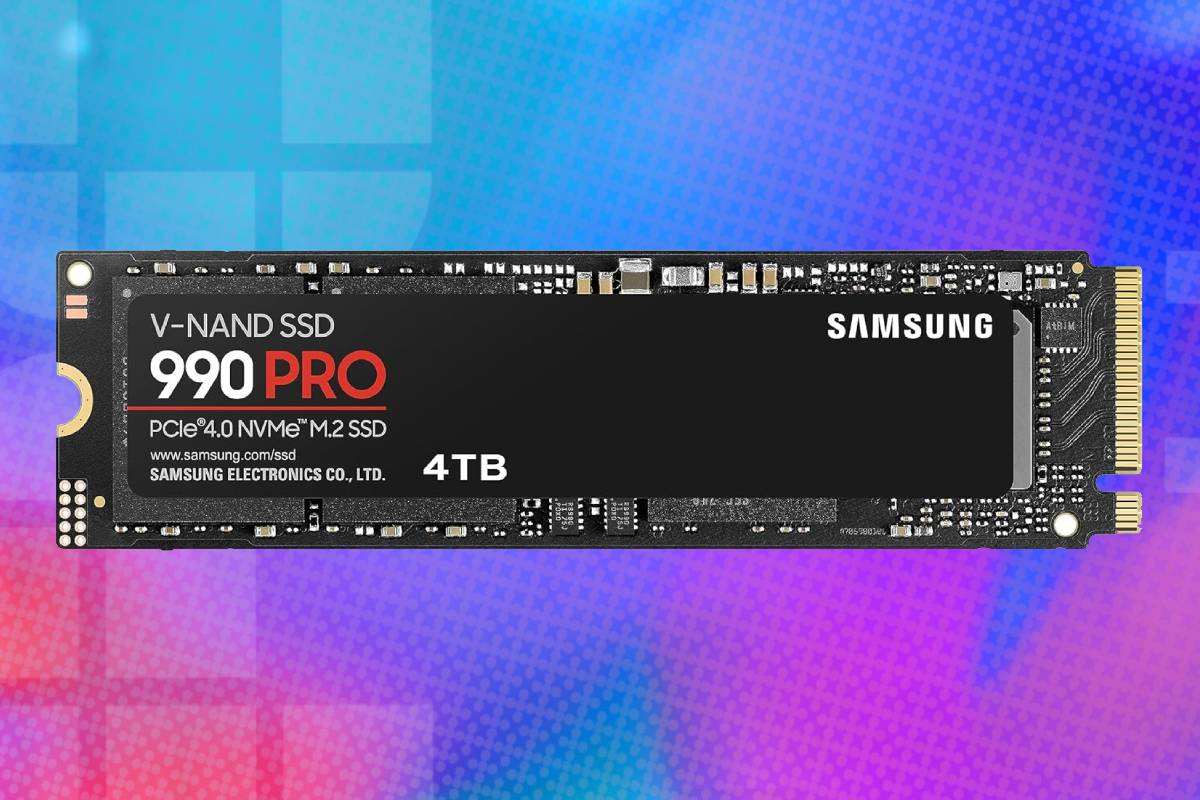
If you’re looking to maximize your PC’s storage this Black Friday, this deal is for you. The Samsung 990 PRO 4TB combines near-interface-limit PCIe 4.0 speeds with high-quality TLC NAND, onboard DRAM and enough capacity for a large game or production library. Its strong random performance and sustained write behaviour make it suitable for gaming, content creation and demanding workstation use. Samsung rates the 4TB 990 PRO for sequential reads of up to 7,450MB/s and writes of up to 6,900MB/s. Those figures place it close to the practical limits of a PCIe 4.0 x4 connection. Pick this 4TB SSD up now for $699.99.
🔥 More offers: see our Black Friday SSD deals 2026 guide, updated daily, or browse all Black Friday deals.
Prices and savings can change. Check the retailer for the current price.
Random performance is rated at up to 1.6 million read IOPS and 1.55 million write IOPS at a high queue depth. Low-queue-depth figures are more relevant to ordinary desktop responsiveness, with Samsung quoting up to 22,000 random read IOPS and 80,000 random write IOPS at QD1.
Black Friday is finally here. Below, you'll find some of the biggest and best deals from this year's most exciting sales event!
- Samsung 49" Odyssey - was $1,279 now $854
- HP HyperX OMEN 16 OLED - was $3,199 now $2,399
- Alienware 32 4K OLED Gaming Monitor - was $699 now $599
- Samsung 75-Inch Class Neo - was $1,197 now $997
- CyberPowerPC RTX 5060 Ti gaming PC - was $1,629 now $1,299
- LG 77-inch OLED C6 - was $2,499 now $1,999
- MSI Prestige 16 Flip - was $2,149 now $1,799
- Hisense 85-inch U6 Pro Series - was $1,999 now $947
Prices correct as of November 25th, 2026.
This particular model does not include a heatsink, so PlayStation 5 users and owners of thermally constrained PCs should add suitable cooling. Read below for more detail on the specifications, or see the foot of this page for alternative Black Friday SSD deals.
What we like about the Samsung SSD 990 PRO 4TB
Near-maximum PCIe 4.0 performance
The 990 PRO uses a PCIe 4.0 x4 interface and supports the NVMe 2.0 protocol. Its rated sequential read speed is only around 550MB/s below the theoretical 8GB/s bandwidth of the interface before accounting for protocol overhead. This makes it suitable for transferring large video projects, disk images, game installations and other substantial files. The full speed requires a compatible PCIe 4.0 M.2 slot connected through an appropriate processor or chipset.
Installing it in a PCIe 3.0 system is possible because PCIe is backward-compatible. Performance will then be restricted to roughly the limits of the older interface, making a less expensive drive potentially better value.
Substantial 4TB capacity
Four terabytes provides enough space for Windows, applications and a large collection of modern games without immediately requiring another drive. It is also useful for high-resolution video, photography catalogues and workstation datasets. Manufacturers define one terabyte as one trillion bytes, while operating systems may report capacity using binary units. After formatting, the nominal 4TB drive will therefore appear closer to 3.64TiB before accounting for partitions and system files.
The high capacity can also help performance because more NAND dies are available for parallel access. Compared with smaller models in the same family, the 4TB version achieves Samsung’s highest quoted random-read figure.
TLC V-NAND rather than QLC
Samsung uses its own V-NAND TLC flash in the 4TB 990 PRO. TLC stores three bits per memory cell and generally provides stronger sustained performance and endurance than value-oriented QLC flash. Independent analysis identifies the 4TB model as using Samsung’s newer 236-layer V8 TLC NAND. This helps the drive maintain a single-sided physical layout despite its high capacity.
TLC does not prevent write speed from falling after the cache fills, but its native performance remains considerably stronger than that of many QLC drives. This matters during large backups, video exports and other prolonged write workloads.
Onboard DRAM cache
The drive includes 4GB of Samsung LPDDR4 memory. This dedicated DRAM stores mapping information that helps the controller locate data efficiently. Some lower-cost SSDs omit onboard DRAM and rely on Host Memory Buffer technology instead. Those designs can still perform well in ordinary use, but dedicated memory is preferable for a flagship drive expected to handle sustained or intensive workloads.
The Amazon listing’s “cache memory installed size: 4” appears to refer to this 4GB DRAM cache, although it fails to include the unit.
Samsung in-house controller
Samsung develops the controller, NAND and firmware used in the 990 PRO. This vertical integration gives the company direct control over performance tuning, power management and firmware development. The controller is commonly identified as Samsung’s Pascal design. It supports TRIM, SMART health monitoring, automatic garbage collection and hardware encryption.
An in-house design is not automatically superior to every third-party controller, but the 990 PRO’s strong benchmark results demonstrate that the complete platform is highly competitive.
Strong random performance
Random performance affects operating-system activity, application launches and workloads involving many small files. Samsung quotes up to 1.6 million random read IOPS for the 4TB model. Peak IOPS results require a sufficiently deep request queue and may not occur during normal home use. Nevertheless, the drive’s low latency and high random throughput help it remain responsive during heavy multitasking.
The 990 PRO is particularly useful when applications access several files simultaneously or when background operations compete with an active workload.
Fast pseudo-SLC cache
Samsung’s Intelligent TurboWrite 2.0 system temporarily treats part of the TLC flash as faster single-bit storage. This absorbs incoming writes at a much higher rate before data is consolidated into the NAND’s normal TLC state. The 4TB model has approximately 10GB of static cache and can allocate a much larger dynamic area when sufficient free space is available. Independent testing identified up to roughly 432GB of dynamic capacity.
Cache availability falls when the drive is nearly full. Leaving unused space helps preserve TurboWrite flexibility, garbage-collection efficiency and overall consistency.
Good post-cache write performance
Every consumer TLC or QLC SSD slows after exhausting its high-speed cache. The important question is how severe that reduction becomes. The 4TB 990 PRO maintained approximately 1.6GB/s in independent sustained-write testing after leaving its pseudo-SLC mode. That is far below the advertised 6.9GB/s maximum but remains fast enough for many demanding workflows.
Users regularly writing several hundred gigabytes in one operation should consider post-cache results rather than relying exclusively on headline specifications. For ordinary game installations and file transfers, the cache is large enough that the lower native speed may rarely be encountered.
High endurance rating
Samsung covers the 4TB model for five years or 2,400TB written, whichever occurs first. Writing 2,400TB over five years would average more than 1.3TB every day. That is far beyond typical gaming and home-computing use. Video professionals, workstation users and other customers with write-heavy workloads should still monitor total writes through SMART data.
Samsung Magician software
Samsung Magician can monitor health data, run performance tests, adjust supported settings and install firmware updates. It also helps confirm that a drive is genuine and operating through the expected interface. Keeping firmware current is important for storage devices. The original lower-capacity 990 PRO models received firmware attention earlier in the product’s life, and checking a newly installed drive remains sensible. The software is designed primarily for Windows. Users on other operating systems may have access to standard NVMe health tools but not the complete Magician feature set.
Hardware encryption support
The 990 PRO supports AES 256-bit hardware encryption, TCG Opal 2.0 and Microsoft’s Encrypted Drive standard. These capabilities can protect data without placing the full encryption workload on the CPU. Actual use depends on the operating system, motherboard firmware and security configuration. Merely installing the drive does not automatically enable full-disk encryption. Buyers with a specific enterprise or compliance requirement should confirm how their chosen system implements and manages the supported standard.
Power efficiency
Samsung states that the 990 PRO offers substantially better performance per watt than the earlier 980 PRO. This can reduce heat and energy use for a given amount of completed work. The 4TB model is rated for approximately 6.5W average active consumption and up to 8.6W during burst activity. Idle consumption is listed at a maximum of 55mW. In a laptop, total battery improvement will depend on the complete workload rather than the SSD alone. High-speed transfers can still generate noticeable heat in a confined enclosure.
Single-sided design
Despite its 4TB capacity, the drive places its components on one side of the circuit board. Its dimensions are approximately 80 × 22 × 2.3mm without a heatsink. A single-sided layout improves compatibility with thin laptops and compact devices that cannot accommodate flash packages on the underside. Physical clearance must still be checked because some systems use restrictive covers or thermal pads. The bare drive weighs roughly nine grams, making it effectively irrelevant to the overall weight of a desktop or laptop.
Who should consider this 4TB SSD deal?
The Samsung 990 PRO 4TB is suited to gamers, creators and workstation users who need a large amount of fast internal storage and have a PCIe 4.0-compatible system. Its combination of TLC NAND, onboard DRAM and strong sustained performance makes it appropriate for demanding use.
It is particularly attractive for users consolidating several smaller drives or moving away from mechanical storage. Four terabytes provides enough capacity for operating-system files, applications, games and active media projects on one device.
PlayStation 5 owners can also use it, but this bare model requires a compatible heatsink. Buyers who do not already own one should compare the total cost with the factory-heatsink version. Owners of PCIe 3.0 systems can install the drive, but they will not receive its full performance. Unless a future platform upgrade is planned, a less expensive PCIe 3.0 or mainstream PCIe 4.0 SSD may offer better value.
More Black Friday SSD deals




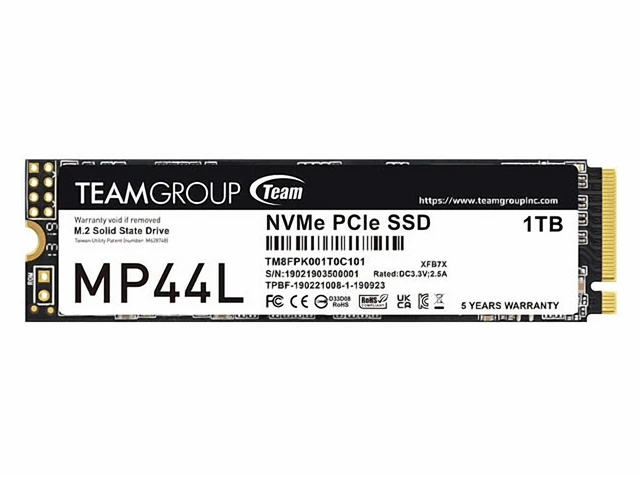


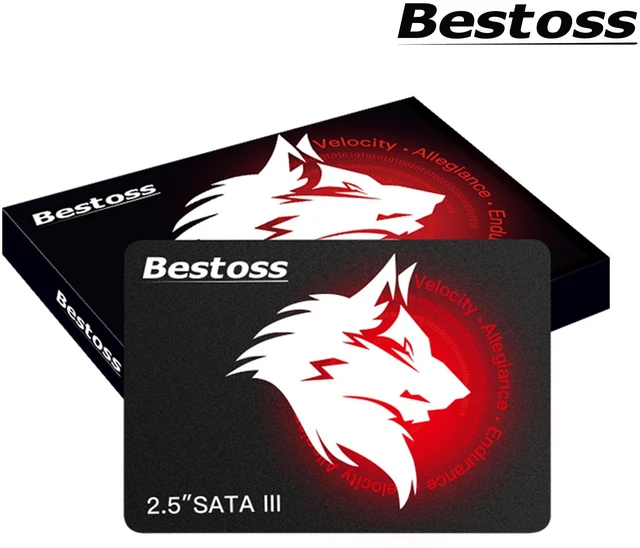
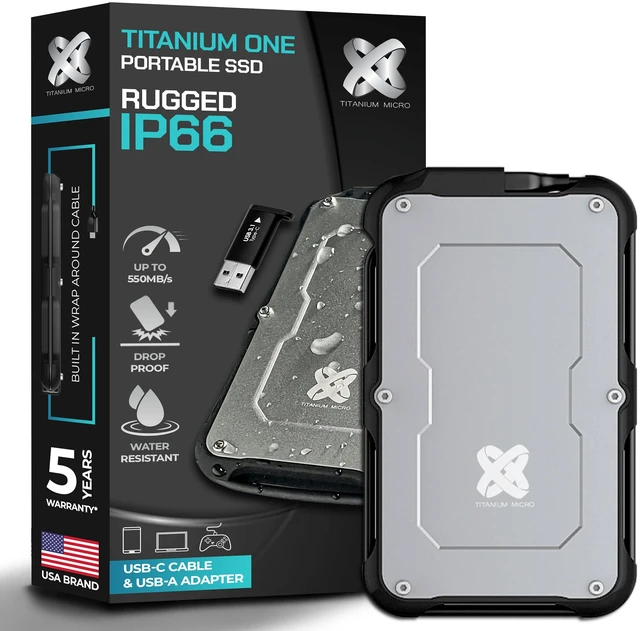


Prices and savings can change. Check the retailer for the current price.
Written by
