
Valve explains Steam Frame and Steam Machine Verified requirements at GDC 2026, includes standalone support

Table of Contents
GDC 2026 (now known as the GDC Festival of Gaming) is well underway. It’s perhaps Valve’s biggest showing as of late, and not because of a new blockbuster game, but because of new Steam hardware. You may be familiar with the Steam Deck Verified program, which lets gamers easily check whether games are compatible with the handheld. Now, Valve is doing the same with its upcoming Steam Machine and Steam Frame devices.
Gamers have patiently waited for Valve to release the Steam Machine mini PC, Steam Frame VR headset, and the 2nd-generation Steam Controller since they were announced last November, but storage and memory shortage-fueled delays have been a problem. Despite the challenges, all three are still on track for a 2026 launch.
Steam Machine Verified vs Steam Frame Verified requirements
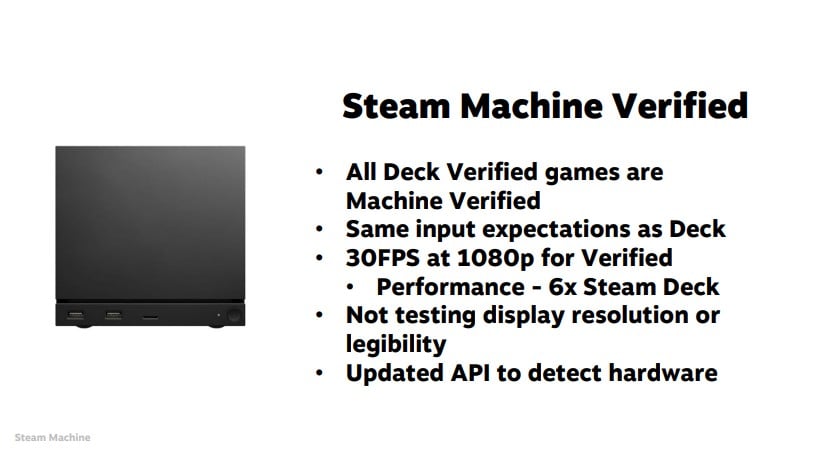
We’ve already had a glimpse of what it takes to be Steam Machine Verified after Valve confirmed in January that all Steam Deck Verified games will run on the device due to “fewer constraints”. Unsurprising when you consider that the Machine offers six times the Deck’s performance. However, we now have a closer look at how to achieve verified status on the cubed mini PC – as well as requirements for Steam Frame Verified status.
Latest PC & Tech deals
- ASUS ROG Strix 34” QD-OLED XG34WCDG - was $7499 now $629
- Hisense 75" U8 Series ULED Mini-LED 4K TV - was $1,499 now $1,354
- ASUS ROG XG27AQNGV- was $999 now $649
- TCL 98 Inch Class QM8L - was $2,499 now $2,309
- CyberPowerPC Gaming PC (RTX 5060) - was $599 now $459
Prices correct as of August 20th, 2026.
Credit: Valve
Credit: Valve
Credit: Valve
For the Steam Machine, it only takes stable 30 FPS performance at 1080p to achieve the verified badge, with the same expectations for input/controller support as the Steam Deck. Thanks to the pretty relaxed requirements, the device will launch with a massive library of verified games – including all titles currently verified on the Deck and more.
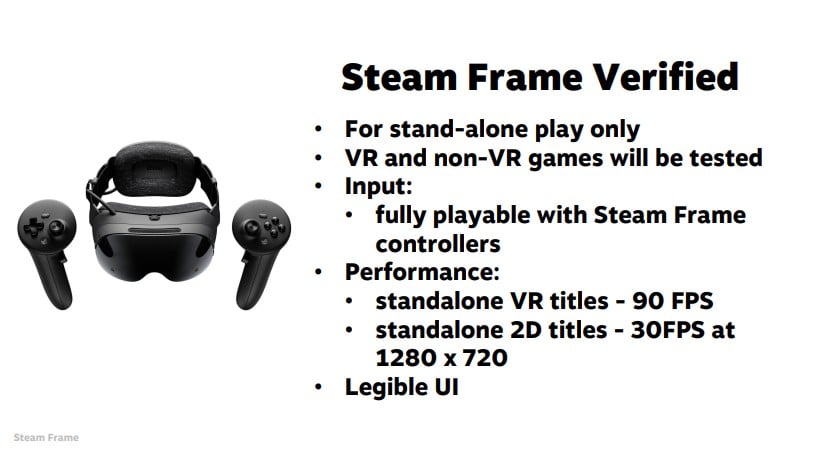
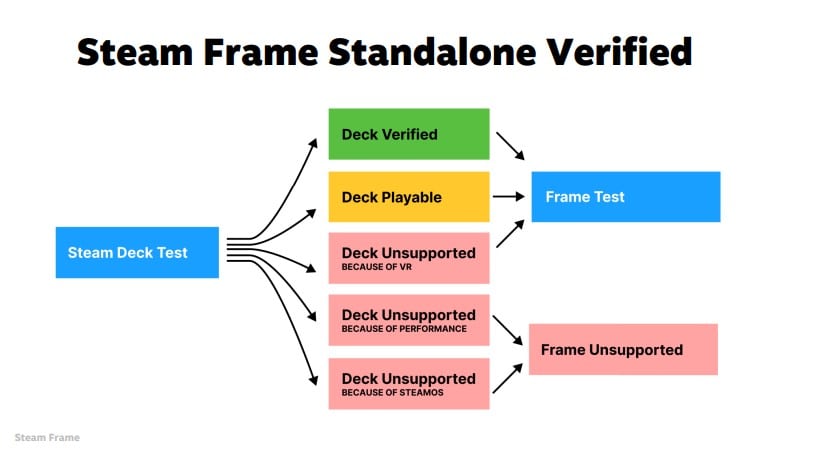
As for the Steam Frame, Valve is focusing on the standalone capabilities of the device. It’s described as a “streaming-first” wireless VR headset, but it does offer standalone gaming with its ARM64 Snapdragon 8 Gen 3 chip, running on SteamOS. Valve has previously said that it should run Half-Life: Alyx without any help from an external gaming PC. To be verified, VR games must run at 90 FPS on the Snapdragon chip, while this drops to just 30 FPS for 2D games running at 1280 x 720.
Valve also discussed the path for getting x86 apps and Android apps running on SteamOS with the Frame’s ARM64 architecture. As expected, it’s via Proton & FEX for x86, and the new Lepton compatibility layer for Android. If you’re interested in the finer details, you can take a look at Valve’s full GDC presentation here.
About the Author