
Best GPUs for Samsung Odyssey G9 in 2026 – our top picks tested


Table of Contents
If you are looking to get a GPU that works well with the Samsung Odyssey G9 monitor, then we have you covered right here. The Odyssey monitor is a 49-inch curved behemoth targeted toward gamers (although creative professionals can also consider getting this). The monitor boasts a dual 1440p resolution, a 240Hz refresh rate, and a 1ms response time, making it suitable for your gaming setup.
This guide delves into the best GPU contenders for the Samsung Odyssey G9 on the marketplace, considering factors like performance, specs, and compatibility. Whether you’re a hardcore gamer seeking the absolute best or exploring value-oriented options, we’ll help you find the perfect GPU to unlock the full potential of your new monitor.
-
Best GPU for Samsung Odyssey G9
ROG Astral GeForce RTX 5080 OC
- GPU: GB203
- CUDA Cores: 10,752
- VRAM: 16GB GDDR7
- Memory Bus Width: 256 bit
- Base Clock Speed: 2,295 MHz
- Boost Clock Speed: 2,790 MHz

-
Best AMD GPU for Odyssey G9 monitor
ASUS Prime RX 9070 XT OC
- GPU: Navi 48 XT
- Stream Processors: 4,096
- VRAM: 16GB GDDR6
- Memory Bus Width: 256-bit
- Base/Game/Boost clock speed: 1,660/2,400/2,970 MHz
- TBP: 304W

-
Best premium GPU for Samsung Odyssey G9
MSI GeForce RTX 5090 SUPRIM SOC
- GPU: GB202
- CUDA cores: 21,760
- VRAM: 32GB GDDR7
- Memory Bus width: 512-bit
- Base clock speed: 2,010MHz
- Boost clock speed: 2,565MHz
-
Best mid-range GPU for Odyssey G9
MSI GeForce RTX 5070 GAMING TRIO OC
- GPU: GB205-300
- CUDA Cores: 6,144
- VRAM: 12GB GDDR7
- Memory bus width: 192-bit
- Base/Boost clock speed: 2,330/2,610MHz
- TBP: 250W
-
Best budget GPU for Odyssey G9
Acer Nitro Intel Arc B580
- GPU: BMG-G21
- Shading units: 2,560
- VRAM: 12GB GDDR6
- Memory bus width: 192-bit
- Bandwidth: 456GB/s
- Base/Boost clock speed: 2,670/2,740MHz


How we selected the best GPUs for the Samsung Odyssey G9
To ensure you get the optimal gaming and productivity experience with the Samsung Odyssey G9, we conducted a comprehensive analysis, taking several key factors into account:
Latest PC & Tech deals
- AMD Ryzen™ 9 9900X 12-Core - was $499 now $337
- iBUYPOWER Element Gaming PC - was $1,999 now $1,699
- LG 27GX700A-B 27-inch Ultragear- was $599 now $485
- Samsung SSD 9100 PRO 1TB - was $339 now $249
- HP OmniBook 5 16 inch - was $961 now $799
Prices correct as of September 21st, 2026.
We prioritized GPUs that can deliver smooth gameplay at the G9’s native 5120 x 1440 resolution and up to 240Hz refresh rate, ensuring you can fully exploit the monitor’s capabilities. Secondly, we ensured compatibility with G-Sync and FreeSync Premium Pro technologies, which are essential for a tear-free gaming experience on the G9.
Thirdly, we ensure that we provide first-hand reviews and benchmarking, so we know the true power of these cards and are able to provide testing lab results to demonstrate their effectiveness. Via all that, here are the in-depth overviews of our choices.




- GPU: GB203
- CUDA Cores: 10,752
- VRAM: 16GB GDDR7
- Memory Bus Width: 256 bit
- Base Clock Speed: 2,295 MHz
- Boost Clock Speed: 2,790 MHz
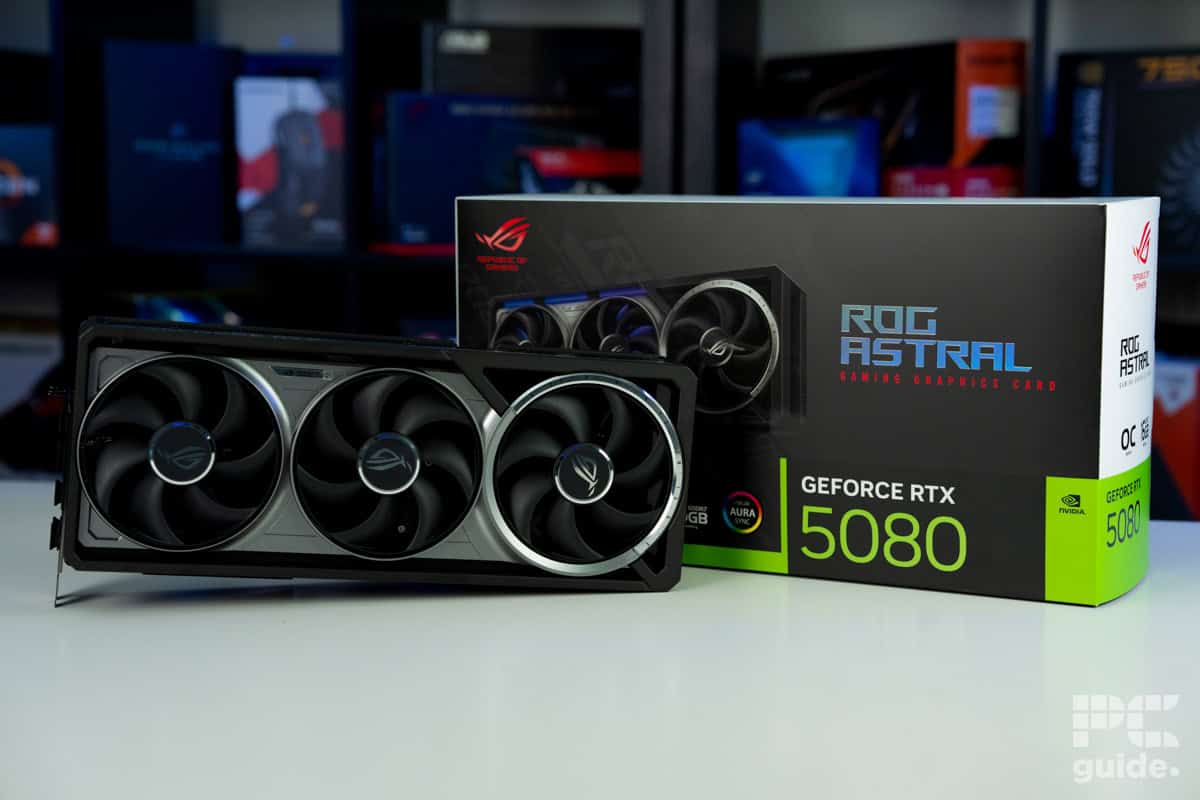
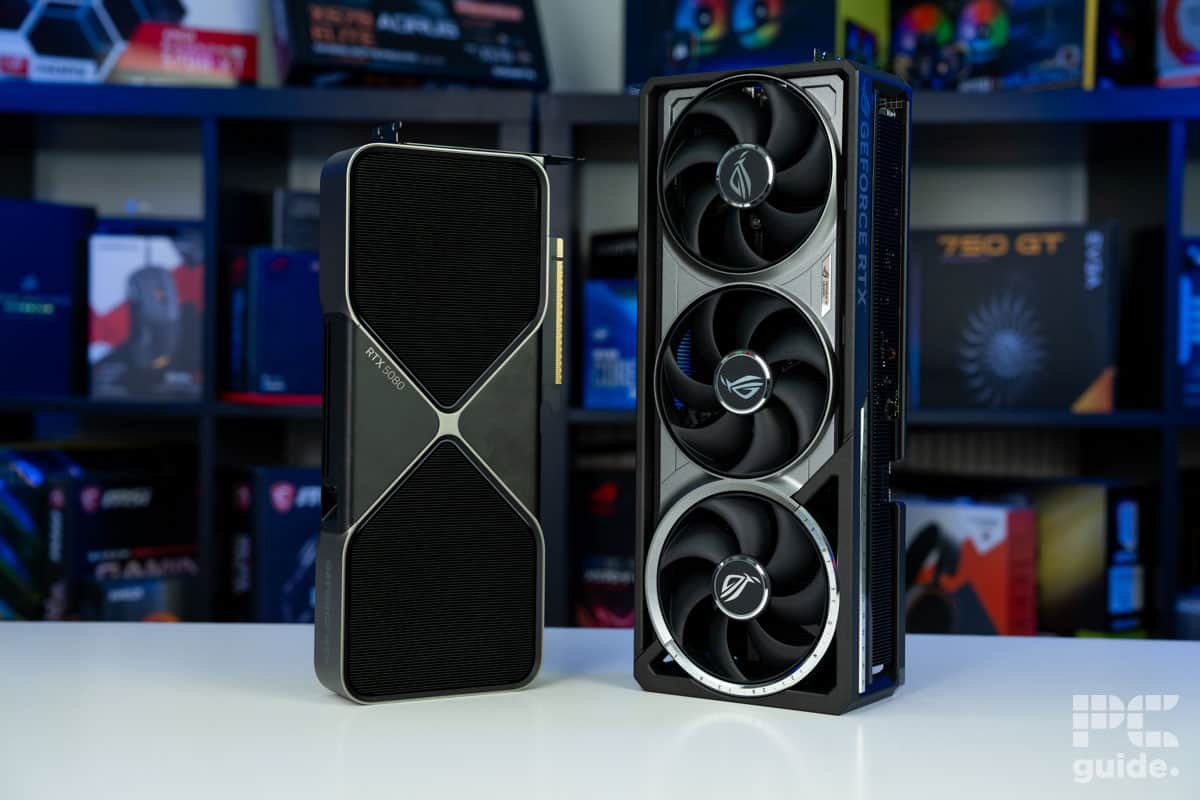
If you’re looking for a GPU that delivers excellent all-around performance in both gaming and professional workloads, the RTX 5080 is one of the most compelling options in Nvidia’s latest lineup. As we found in our review, it offers significant generational improvements and comes in multiple variants.
One of the biggest upgrades over its predecessor is the move to GDDR7 memory, which offers a per-pin speed of 32Gbps compared to GDDR6X’s 24Gbps. This translates to far greater bandwidth and efficiency, allowing the RTX 5080 to process massive amounts of data quickly for gaming and creative tasks alike. It also benefits from PCIe 5.0 support, ensuring full use of modern motherboard bandwidth and minimizing bottlenecks.
Despite its power, the RTX 5080 is compact and efficient, designed as a 2-slot card measuring 304 x 137 x 48 mm. It takes up less space than the previous generation while maintaining excellent thermal performance thanks to refined cooling solutions. For testing, we paired it with the Ryzen 7 9800X3D, one of the best CPUs for high-end gaming.
In gaming benchmarks, the RTX 5080 impressed across the board. In F1 24, it reached 171 FPS at 1080p, 136 FPS at 1440p, and 84 FPS at 4K natively. With DLSS 4 enabled, performance jumped dramatically, up to 192 FPS at 1080p (Quality), 183 FPS at 1440p (Balanced), and 147 FPS at 4K (Performance). Turning on Multi-Frame Generation pushed 4K further to 189 FPS, an improvement of over 100 frames compared to native performance.
The ROG Astral RTX 5080 OC is as impressive as it gets, offering a higher boost clock, enhanced cooling, and much more that makes it stand out from the crowd. The price is, as expected, pretty hefty compared to the Founders Edition, although its improved performance and design may be enough to justify the increased price for some. An expensive option, but one that deliver.
PC Guide
In Cyberpunk 2077, the RTX 5080 posted 213 FPS at 1080p, 151 FPS at 1440p, and 72 FPS at 4K, outpacing the RTX 4080’s 201, 126, and 57 FPS in the same test. When pushed to its limits with Ray Tracing Overdrive, the card initially dropped to 19 FPS at 4K, but DLSS and MFG transformed the experience. With DLSS Performance, it hit 58 FPS; enabling MFG 2x raised this to 103 FPS, and MFG 4x delivered a staggering 183 FPS. That’s a massive leap of over 160%, showcasing just how far Nvidia’s AI-driven rendering has evolved.
The RTX 5080 isn’t just a gaming powerhouse; it also shines in professional workloads. In 3DMark testing, it scored 21,568 in Fire Strike Ultra and 16,069 in Time Spy Extreme, both measuring 4K rendering performance. In the Port Royal ray tracing benchmark, it achieved 22,113 points. By comparison, the RTX 4080 scored 16,135, 12,930, and 16,894 in the same tests, making the RTX 5080 a clear generational leap in both rasterized and ray-traced rendering.
Overall, the RTX 5080 strikes a strong balance between performance, efficiency, and advanced AI features. With its compact design, next-gen memory, and massive performance uplift over the RTX 4080, it’s one of the most versatile GPUs available, equally capable for cutting-edge 4K gaming and demanding creative workflows.

ROG Astral RTX 5080 OC Cyberpunk 2077, Image by PC Guide

ROG Astral RTX 5080 OC Doom Eternal, Image by PC Guide

ROG Astral RTX 5080 OC Horizon Zero Dawn Remastered, Image by PC Guide

ROG Astral RTX 5080 OC CS2, Image by PC Guide

ROG Astral RTX 5080 OC Geekbench AI 1.2, Image by PC Guide

ROG Astral RTX 5080 OC Cyberpunk 2077 DLSS, Image by PC Guide

ROG Astral RTX 5080 OC F1 24, Image by PC Guide

ROG Astral RTX 5080 OC Indiana Jones The Great Circle, Image by PC Guide

ROG Astral RTX 5080 OC AC Mirage, Image by PC Guide

ROG Astral RTX 5080 OC Geekbench 6, Image by PC Guide

ROG Astral RTX 5080 OC Blender 4.3, Image by PC Guide

ROG Astral RTX 5080 OC 3DMark, Image by PC Guide

ROG Astral RTX 5080 OC Geekbench AI 1.2, Image by PC Guide


- GPU: Navi 48 XT
- Stream Processors: 4,096
- VRAM: 16GB GDDR6
- Memory Bus Width: 256-bit
- Base/Game/Boost clock speed: 1,660/2,400/2,970 MHz
- TBP: 304W
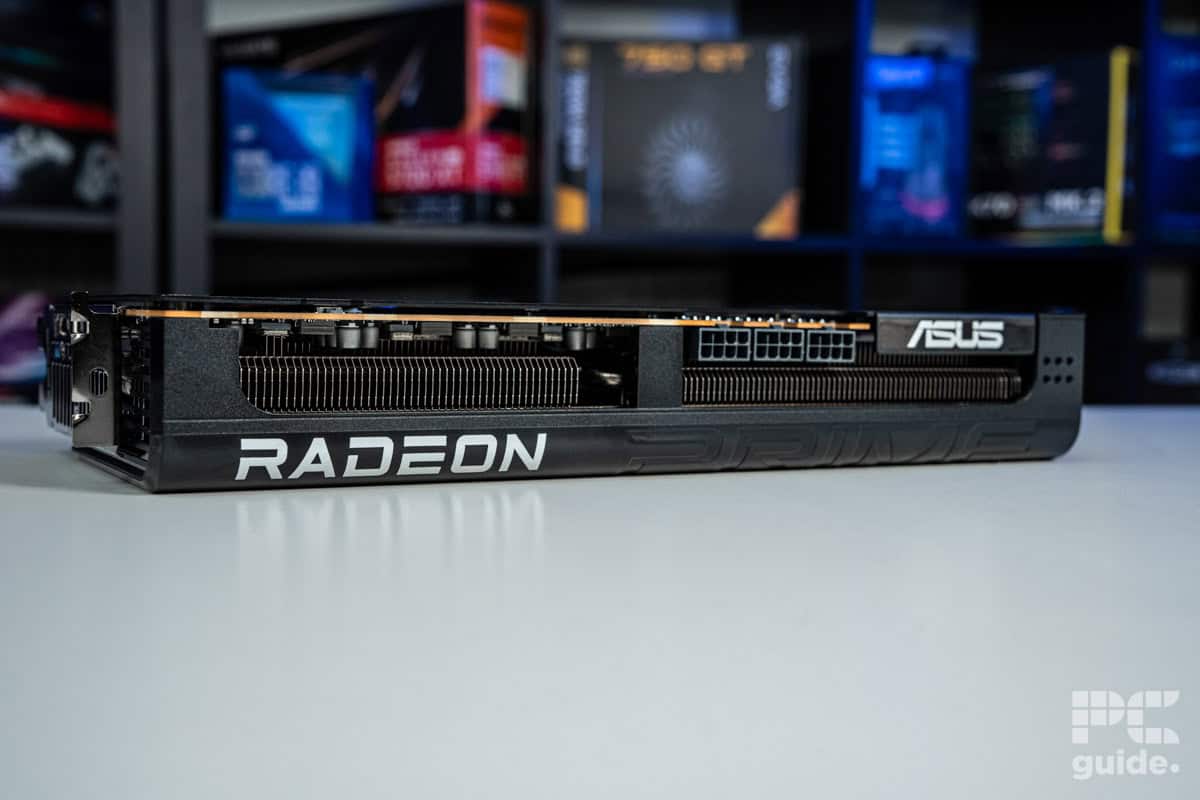
If you’re looking at something from AMD, the RDNA 4 range has plenty of options to choose from, and with some rather compelling choices. The RX 9070 XT has earned praise across reviews, including ours, thanks to its competitive performance and aggressive pricing strategy, even if the small gap between the two models raises eyebrows.
At its core, the RX 9070 XT is powered by the Navi 48 GPU, bringing RDNA 4 features and performance without trying to directly challenge Nvidia’s flagship 90-series. It supports PCIe Gen 5, and with boost clocks brushing 3 GHz (and easily breaking that mark on custom overclocked models), it delivers impressive speed for a mid-to-high tier card. AMD’s return to a monolithic chip design and continued use of GDDR6 memory help keep costs in check while still maintaining strong gaming output.
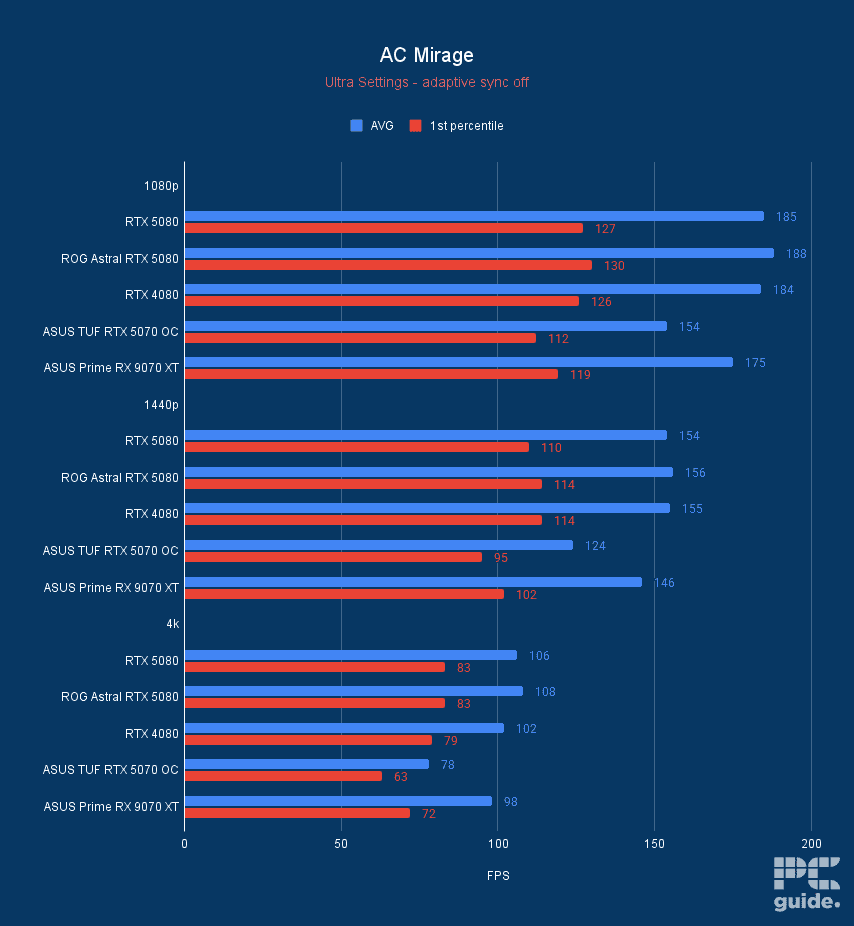
With an MSRP of $599, the RX 9070 XT delivers excellent value. In our testing, it consistently outpaced the RTX 5070 by a healthy margin and even kept pace with Nvidia’s higher-tier RTX 4080 and 5080 in certain scenarios, despite being far more affordable.
Overall, the RX 9070 XT is a great graphics card for the price. Fighting against cards higher up in tiers and so providing an excellent choice even for 4K gaming and with ray tracing capabilities.
PC Guide
In Cyberpunk 2077 at 4K ultra settings, the RX 9070 XT averaged 61 FPS, showing that it can handle demanding games at high resolutions. Enabling ray tracing no longer incurs the punishing performance drop that older AMD cards struggled with, keeping results competitive with Nvidia in this category. While DLSS 4 still has the edge with features like multi-frame generation, AMD’s FSR with frame generation closes the gap, providing a smooth experience across resolutions.
That said, the RX 9070 XT does show some weaknesses in synthetic and professional workloads. In 3DMark and rendering tasks, it performed well, but Geekbench benchmarks revealed clear shortcomings compared to Nvidia’s architecture, especially for users relying on their GPU for AI or compute-heavy applications.
For pure gaming, however, the RX 9070 XT is a fantastic option. Against the RTX 5070, its closest rival in price, it delivers significantly stronger performance for just a little more money, making it one of the most competitive GPUs in the mid-range market right now.

ASUS Prime RX 9070 XT OC F1 24, Image by PC Guide

ASUS Prime RX 9070 XT OC Cyberpunk 2077, Image by PC Guide

ASUS Prime RX 9070 XT OC Indiana Jones The Great Circle, Image by PC Guide
ASUS Prime RX 9070 XT OC AC Mirage, Image by PC Guide

ASUS Prime RX 9070 XT OC Horizon Zero Dawn Remastered, Image by PC Guide

ASUS Prime RX 9070 XT OC Cyberpunk 2077 DLSS FSR, Image by PC Guide

ASUS Prime RX 9070 XT OC Doom Eternal, Image by PC Guide

ASUS Prime RX 9070 XT OC CS2, Image by PC Guide

ASUS Prime RX 9070 XT OC 3DMark, Image by PC Guide

ASUS Prime RX 9070 XT OC Geekbench 6, Image by PC Guide

ASUS Prime RX 9070 XT OC Geekbench AI, Image by PC Guide


- GPU: GB202
- CUDA cores: 21,760
- VRAM: 32GB GDDR7
- Memory Bus width: 512-bit
- Base clock speed: 2,010MHz
- Boost clock speed: 2,565MHz
The RTX 5090 has officially replaced the RTX 4090 as the most powerful consumer GPU on the market. If you’re looking for the ultimate card to run games on the Odyssey G9 with ray tracing enabled, there’s no better option available right now.
Powered by Nvidia’s new Blackwell architecture, the RTX 5090 comes with a staggering 21,760 CUDA cores and 32GB of next-gen GDDR7 memory. This ensures that no matter how demanding the game or workload, VRAM limitations won’t be an issue. The card also debuts a 512-bit memory interface, a first for Nvidia. With a 28 Gbps memory clock, it achieves a blistering 1.79 TB/s bandwidth, putting it far ahead of previous generations. Paired with PCIe 5.0 support, the 5090 is built for the most demanding gaming, rendering, and AI workloads without bottlenecks.
Sitting as the flagship card, the RTX 5090 is no doubt a spectacular graphics card. Shredding through any task you throw at it and playing games with great framerates, no matter the resolution. But the MSI Suprim SOC is a surprisingly big custom model for it, along with the price tag, it’s definitely not suited for everyone. However, it comes with a great overclock and an impressive cooling solution, which all make it one of the best graphics cards out there right now, with some incredible specs, particularly a high-end VRAM setup.
PC Guide
In our review, performance was nothing short of outstanding. At 4K ultra settings, the RTX 5090 consistently delivered smooth gameplay across all modern titles, while its massive VRAM pool also made it an exceptional choice for content creation, 3D rendering, and AI-driven workflows. Despite its raw power, thermals were surprisingly well-managed thanks to improved cooling designs.
In benchmarks, Cyberpunk managed an average of 110fps at 4K and 212 fps at 1440p. With ray tracing, that becomes 60 and 112fps instead, with plenty more performance across other workloads as well. That makes it a well-rounded option, for which you can see more performance graphs below.
That said, achieving this level of performance comes with trade-offs. The MSI Suprim SOC edition we tested ships heavily factory-overclocked and is physically enormous, measuring 359 x 150 x 76 mm. Its sheer size and weight make it tricky to fit into most standard PC cases, and proper airflow is a must. Combined with its premium price tag, the RTX 5090 isn’t for everyone; it’s designed purely for enthusiasts who demand the absolute best.

MSI Suprim SOC RTX 5090 AC Mirage, Image by PC Guide

MSI Suprim SOC RTX 5090 Cyberpunk 2077, Image by PC Guide

MSI Suprim SOC RTX 5090 Doom Eternal, Image by PC Guide

MSI Suprim SOC RTX 5090 Indiana Jones Great Circle, Image by PC Guide

MSI Suprim SOC RTX 5090 F1 24, Image by PC Guide

MSI Suprim SOC RTX 5090 CS2, Image by PC Guide

MSI Suprim SOC RTX 5090 Horizon Zero Dawn Remastered, Image by PC Guide

MSI Suprim SOC RTX 5090 Cyberpunk 2077 DLSS 4, Image by PC Guide

MSI Suprim SOC RTX 5090 Geekbench 6, Image by PC Guide

MSI Suprim SOC RTX 5090 Geekbench AI, Image by PC Guide

MSI Suprim SOC RTX 5090 3DMark, Image by PC Guide

MSI Suprim SOC RTX 5090 Blender 4.3, Image by PC Guide


- GPU: GB205-300
- CUDA Cores: 6,144
- VRAM: 12GB GDDR7
- Memory bus width: 192-bit
- Base/Boost clock speed: 2,330/2,610MHz
- TBP: 250W
The Nvidia GeForce RTX 5070, released in March 2025, brings the Blackwell architecture down to the mid-range segment. Positioned below the flagship 5090 and 5080 models, it serves as an accessible entry point to Nvidia’s latest generation, though it has already been nudged aside by the more affordable RTX 5060 series. Still, the 5070 delivers the full suite of Nvidia features, including DLSS 4, ray tracing, and AI-accelerated enhancements that help maximize performance.
At its core, the RTX 5070 is powered by the GB205-300 GPU, featuring 6,144 CUDA cores and paired with 12GB of GDDR7 memory. While the capacity may feel a little tight for high-resolution workloads, its 28 Gbps memory clock and 192-bit bus provide a respectable 672 GB/s bandwidth, keeping things efficient. Out of the box, the card runs at 2,325 MHz base and 2,512 MHz boost, with factory-overclocked variants like the MSI Gaming Trio reaching around 2,610 MHz. Power draw sits at 250W, slightly lower than competing AMD options.
The MSI Gaming Trio RTX 5070 OC brings a high-quality build and design to the table, along with a performance that matches.
PC Guide
In real-world testing, the RTX 5070 delivered solid but not spectacular results. In Cyberpunk 2077, the card averaged 167 FPS at 1080p, 107 FPS at 1440p, and 48 FPS at 4K. Enabling ray tracing cut those numbers significantly to 71, 44, and 22 FPS, respectively, making DLSS 4 and multi-frame generation practically essential for smooth gameplay at higher settings. Across our wider benchmark suite, the card generally held 60 FPS at 4K, though it just missed the mark in certain demanding titles.
Beyond gaming, the RTX 5070 also carries Nvidia’s usual strengths in creative and AI workloads. Thanks to the upgraded NVENC encoder and Blackwell’s improved AI efficiency, it remains a reliable choice for content creators who need both gaming performance and productivity support.
At $549 MSRP, the RTX 5070 feels pricey for a mid-range card that often trails AMD’s RX 9070 XT in both raw performance and value. Still, for gamers who prefer Nvidia’s ecosystem and advanced features like DLSS 4 and superior ray tracing support, the RTX 5070 is a capable option, though not the most cost-effective one in today’s market.

MSI Gaming Trio RTX 5070 OC Cyberpunk 2077 Upscaling, Image by PC Guide

MSI Gaming Trio RTX 5070 OC Indiana Jones The Great Circle, Image by PC Guide

MSI Gaming Trio RTX 5070 OC CS2, Image by PC Guide

MSI Gaming Trio RTX 5070 OC Doom Eternal, Image by PC Guide

MSI Gaming Trio RTX 5070 OC Horizon Zero Dawn Remastered, Image by PC Guide

MSI Gaming Trio RTX 5070 OC F1 24, Image by PC Guide

MSI Gaming Trio RTX 5070 OC AC Mirage, Image by PC Guide

MSI Gaming Trio RTX 5070 OC Cyberpunk 2077, Image by PC Guide

MSI Gaming Trio RTX 5070 OC Geekbench AI, Image by PC Guide

MSI Gaming Trio RTX 5070 OC Geekbench, Image by PC Guide

MSI Gaming Trio RTX 5070 OC Blender, Image by PC Guide

MSI Gaming Trio RTX 5070 OC 3DMark, Image by PC Guide


- GPU: BMG-G21
- Shading units: 2,560
- VRAM: 12GB GDDR6
- Memory bus width: 192-bit
- Bandwidth: 456GB/s
- Base/Boost clock speed: 2,670/2,740MHz
The Intel Arc B580 marks a strong return for Team Blue with its second-generation Battlemage architecture, improving significantly on the first-gen Alchemist cards. Positioned firmly in the budget GPU market, the Arc B580 provides an affordable yet capable option for gamers looking for solid 1080p and even 1440p performance without breaking the bank.
In our review of the Acer Nitro Intel Arc B580, we found the card’s performance surprisingly strong for its class. In Cyberpunk 2077, one of the most demanding games on the market, the B580 delivered 94 FPS at 1080p and 62 FPS at 1440p without even relying on XeSS upscaling. For 4K gaming, results varied depending on optimization, but it still managed 54 FPS in Shadow of the Tomb Raider and an impressive 90 FPS in Doom Eternal, showing it can push into higher resolutions when paired with XeSS 2 or XeFG.
Coming in with a decent amount of VRAM for the ever-growing graphics requirements at a lower price, it even offers 1440p performance at times in a tier where the competition was a bit stale. It’s certainly a great alternative to an entry-level gaming card.
Under the hood, the Arc B580 is equipped with 20 Xe cores and 2,560 shading units, clocked at a 1,700 MHz base and a 2,740 MHz boost at 200W TDP. The Acer Nitro variant we tested comes with factory overclocking, pushing the boost to 2,740 MHz at 190W, unlocking even more performance for those who want to tinker.
Physically, the card measures a fairly manageable size and includes a built-in anti-sag support bracket, a thoughtful addition not often seen at this price point. Cooling is handled by a triple-fan design, which keeps thermals under control even when overclocked.
At just $249 MSRP, the Intel Arc B580 delivers fantastic value for money, rivaling Nvidia’s RTX 4060 and AMD’s RX 7600 while often outperforming them at higher resolutions. For budget builders or those seeking an all-Intel setup, the Arc B580 is one of the best entry-level GPUs you can buy today.

Acer Nitro Intel Arc B580 CS2, Image by PC Guide

Acer Nitro Intel Arc B580 Cyberpunk 2077, Image by PC Guide

Acer Nitro Intel Arc B580 Shadow of the Tomb Raider, Image by PC Guide

Acer Nitro Intel Arc B580 Doom Eternal, Image by PC Guide

Acer Nitro Intel Arc B580 Indiana Jones The Great Circle, Image by PC Guide

Acer Nitro Intel Arc B580 AC Mirage, Image by PC Guide

Acer Nitro Intel Arc B580 Horizon Zero Dawn, Image by PC Guide

Acer Nitro Intel Arc B580 F1 24, Image by PC Guide

Acer Nitro Intel Arc B580 Geekbench, Image by PC Guide

Acer Nitro Intel Arc B580 Geekbench AI, Image by PC Guide

Acer Nitro Intel Arc B580 3DMark, Image by PC Guide
Considerations for the best GPUs for Samsung Odyssey G9
Before purchasing a graphics card for your Odyssey monitor, consider the following factors.
Specs and display
An important consideration when purchasing a GPU for a specific product is making sure you understand what you are buying it for. The Samsung Odyssey G9 has a number of key specs that should be understood. For instance, a 5,120 x 1,440 resolution. a max 240Hz refresh rate, and 160W max power consumption.
In this case, you want to get a GPU for 1440p 240Hz, except that, being an ultrawide, it’s a dual-screen 1440p, so you might need a bit more power than usual. Either way, it does need a bit more specs and power than your usual setup and might even sneak into 4K GPU territory.
Adaptive Sync compatibility
Adaptive sync compatibility is a game-changer for smooth visuals. It tackles the issue of mismatched refresh rates between your monitor and graphics card, eliminating screen tearing and stuttering. Traditionally, monitors have a fixed refresh rate, which can cause problems if the GPU outputs frames at a different pace. Screen tearing appears as jagged lines on the screen, while stuttering makes the image jerk or skip frames.
Adaptive sync bridges this gap by enabling constant communication between the monitor and the graphics card. There are two main technologies: Nvidia’s G-Sync and the more widely adopted FreeSync from AMD. Overall, adaptive sync compatibility is a must-have for gamers seeking a flawless visual experience, especially on high refresh rate monitors.
Price
Getting the most for your money is key when choosing a GPU for the Samsung Odyssey G9. Here are some strategies to snag a great deal:
- Black Friday and Spring Sales are prime times to find GPUs at discounted prices. However, many retailers like Amazon run promotions year-round. Keep an eye out for these opportunities!
- Use price history trackers like Camelcamelcamel to see a product’s price fluctuations and identify sale patterns. This way, you’ll know if the current price is a good deal or if you should wait for a bigger drop.
By carefully considering these factors, you’ll be well-equipped to choose the perfect GPU and unleash the true potential of your monitor. Checking the benchmarks to have the GPU perform as you want is enough for what you want.
Size
When it comes to picking out your graphics card, the size and build might be of influence to you. If you’re trying to build a smaller form factor system, an ITX GPU might be of interest to you. However, that limits your power and tier of GPU to a lot less. Instead, a water-cooled option might be better, or finding a case that can fit a longer card might be necessary instead to fit these larger cards like the RTX 5090/5080.
Do you need a good GPU for an Odyssey G9?
As an ultrawide monitor, the Odyssey G9 requires a GPU that can keep up. Color accuracy, decent average brightness, and full-resolution graphics are a must when gaming or designing. To ensure this, make sure you pick a high-quality GPU to keep graphics smooth and responsive.
How to get 240Hz on Samsung Odyssey G9?
To be able to get 240Hz on the Samsung Odyssey G9, you need to have both the right connection and the right GPU to be able to achieve it. Firstly, you need to connect via an HDMI 2.1 connector on your GPU, or use DisplayPort, as these are the only ones able to reach the higher bandwidth and the right refresh rate.
Then that GPU needs to be good enough to reach framerates of 240Hz to actually be able to satisfy the refresh rate. But if you can’t upgrade right now, there are upscaling technologies you can use, like DLSS or FSR, to try and boost it enough to reach that same level without having to buy a new GPU.
What GPUs have a variable refresh rate for the G9?
All the recent modern graphics cards will have a variable refresh rate; cards from Nvidia, AMD, and Intel will have the technology to use it. That’s if your monitor supports it; in the case of the G9, it supports Nvidia’s G-Sync and AMD’s FreeSync Premium Pro.
What HDMI version does the Odyssey G9 use?
The Odyssey G9 has HDMI 2.1, which enables you to use higher resolutions and refresh rates with the connector. So it might limit your GPU choice to be able to support that, which, to be fair, is most of the recent generations of hardware.
What DisplayPort version does the Odyssey G9 use?
Samsung has put DisplayPort 1.4 on the Odyssey G9, which is fairly standard across the board in both displays and GPUs. Only more recently has DisplayPort 2.1 been introduced, but 1.4 is still plenty for enabling the full function of the 1440p 240Hz display.
About the Author